Reading a Swedish workwear tag: old Fristads work trousers
Grey-green Swedish work trousers turn up often in vintage shops, and the tags are short: a brand, a size code and one more word. Here is how we read the tag on a pair that came through our shop in Japan.
Short answer: "FRISTADS" is a Swedish workwear maker founded in 1925. "St 56" is a size: "St" is most likely short for the Swedish word for size, and 56 is a European size number, not a waist in inches. "Sanfor" refers to Sanforization, a pre-shrinking process for cotton cloth. The tag tells you the maker, the size and that the cloth was pre-shrunk. It does not give a year.
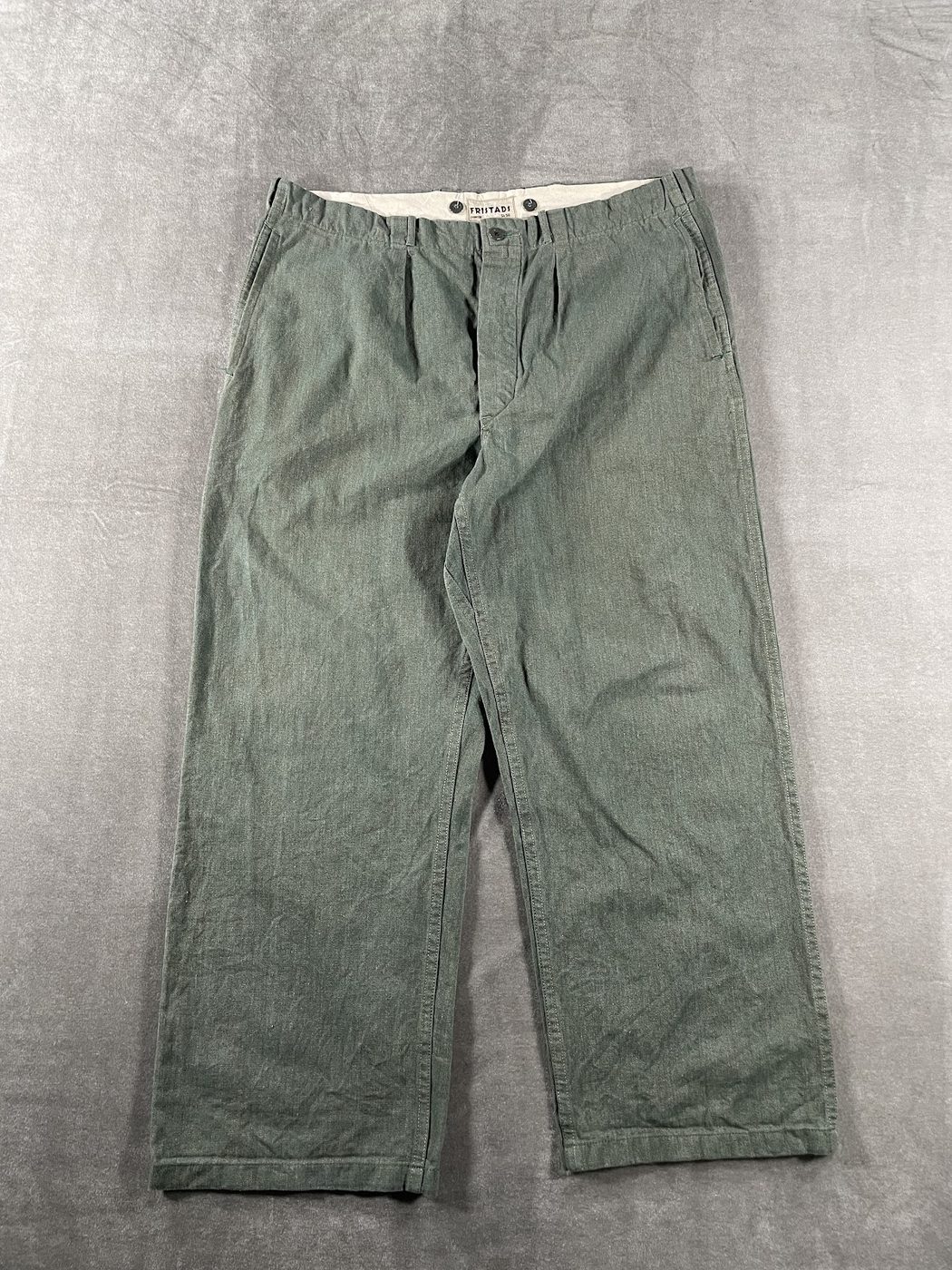
1. The tag: three words
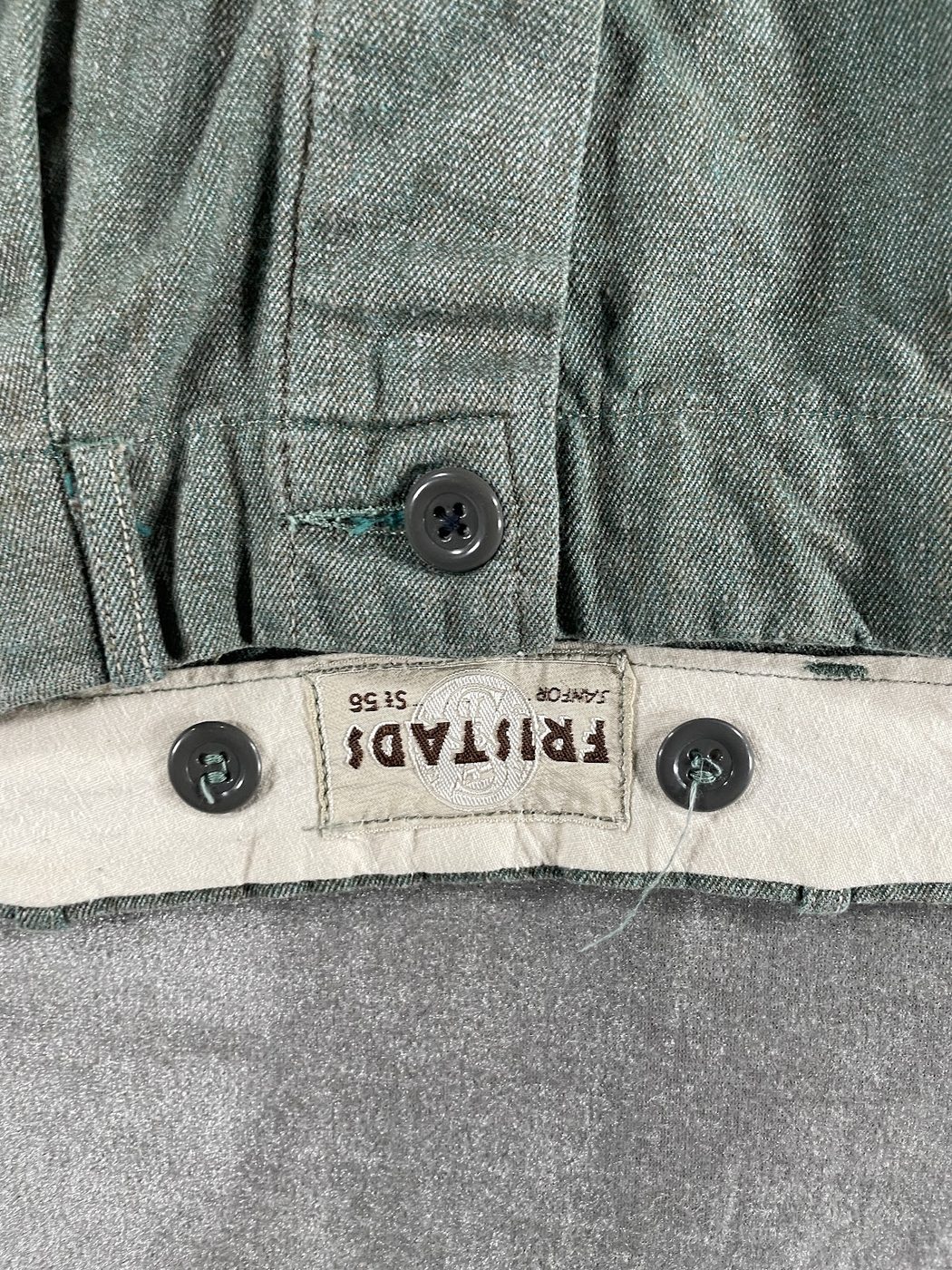
FRISTADS. The company was founded in 1925 by John Magnuson in the village of Fristad, near Borås in Sweden. By the end of the 1950s it was Sweden's largest workwear maker (Fristads: Our history). Because the company made workwear for decades, the name alone does not date a pair.
St 56. "St" is most likely short for storlek, Swedish for size. Fristads says that from the start it offered as many as 34 sizes of each garment, while its main competitor offered five or six (Fristads: Our history). On this pair the same "56" is also stamped on the inside of the fly. The waist measures 96 cm all round, about a men's extra large today.
SANFOR. This refers to Sanforization, a process invented by Sanford L. Cluett and patented in 1930. It pre-shrinks cotton cloth so the finished garment shrinks very little when washed (Wikipedia: Sanforization). For you, it means the size on the tag should still be close to the size of the trousers.
2. The construction
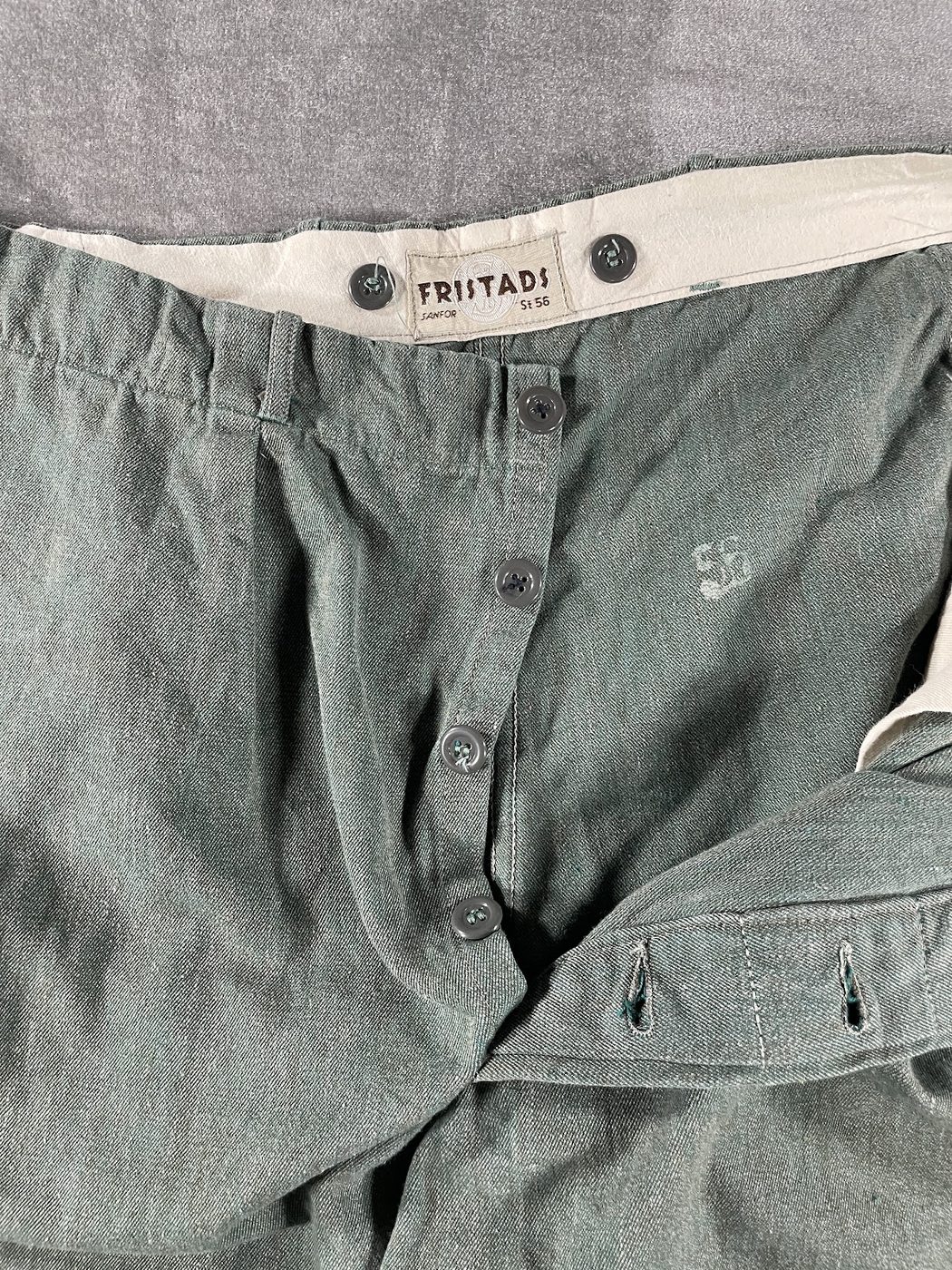
The front closes with a button fly. The waistband is lined with a pale cotton, which is where the tag is printed.
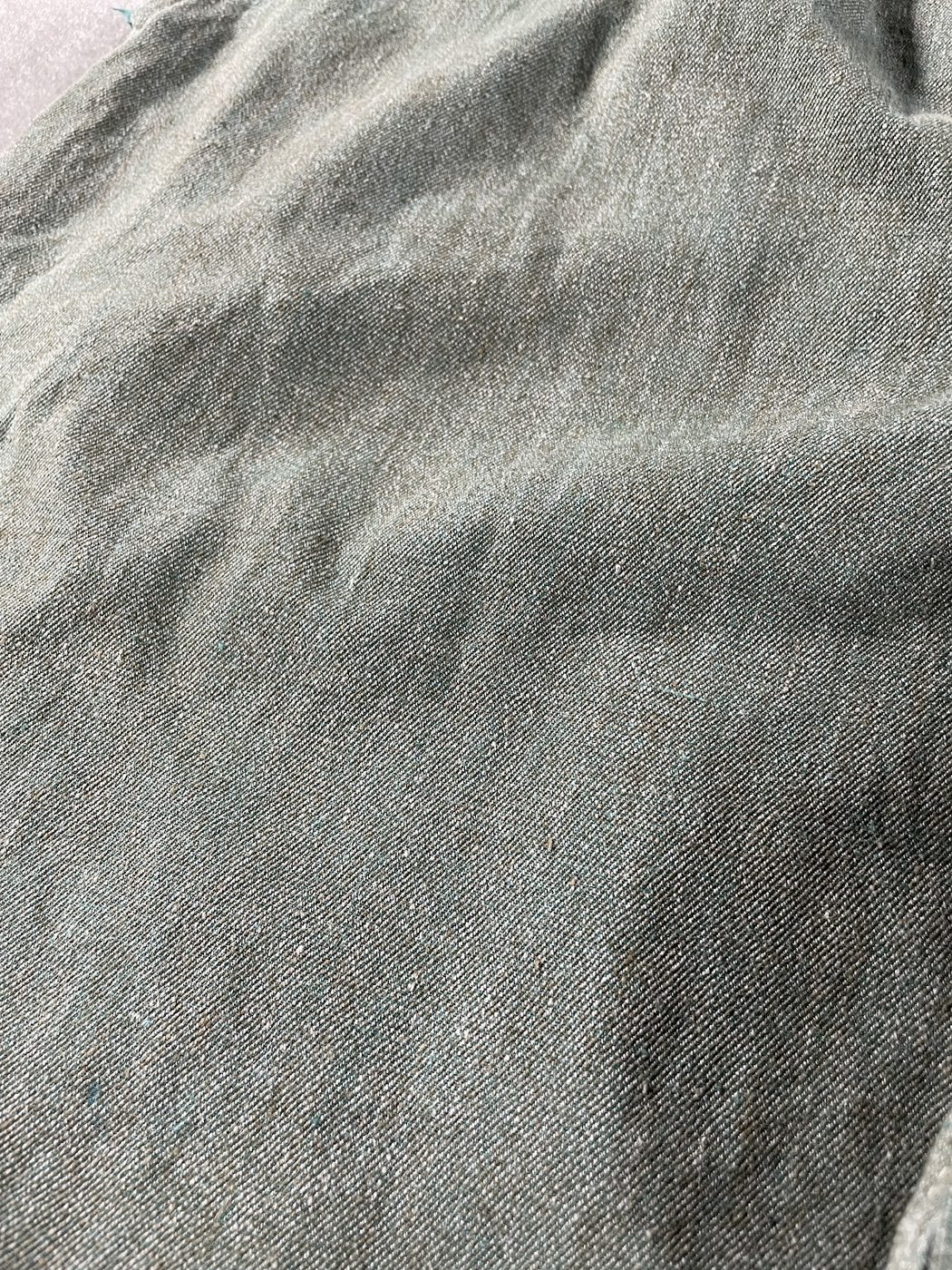
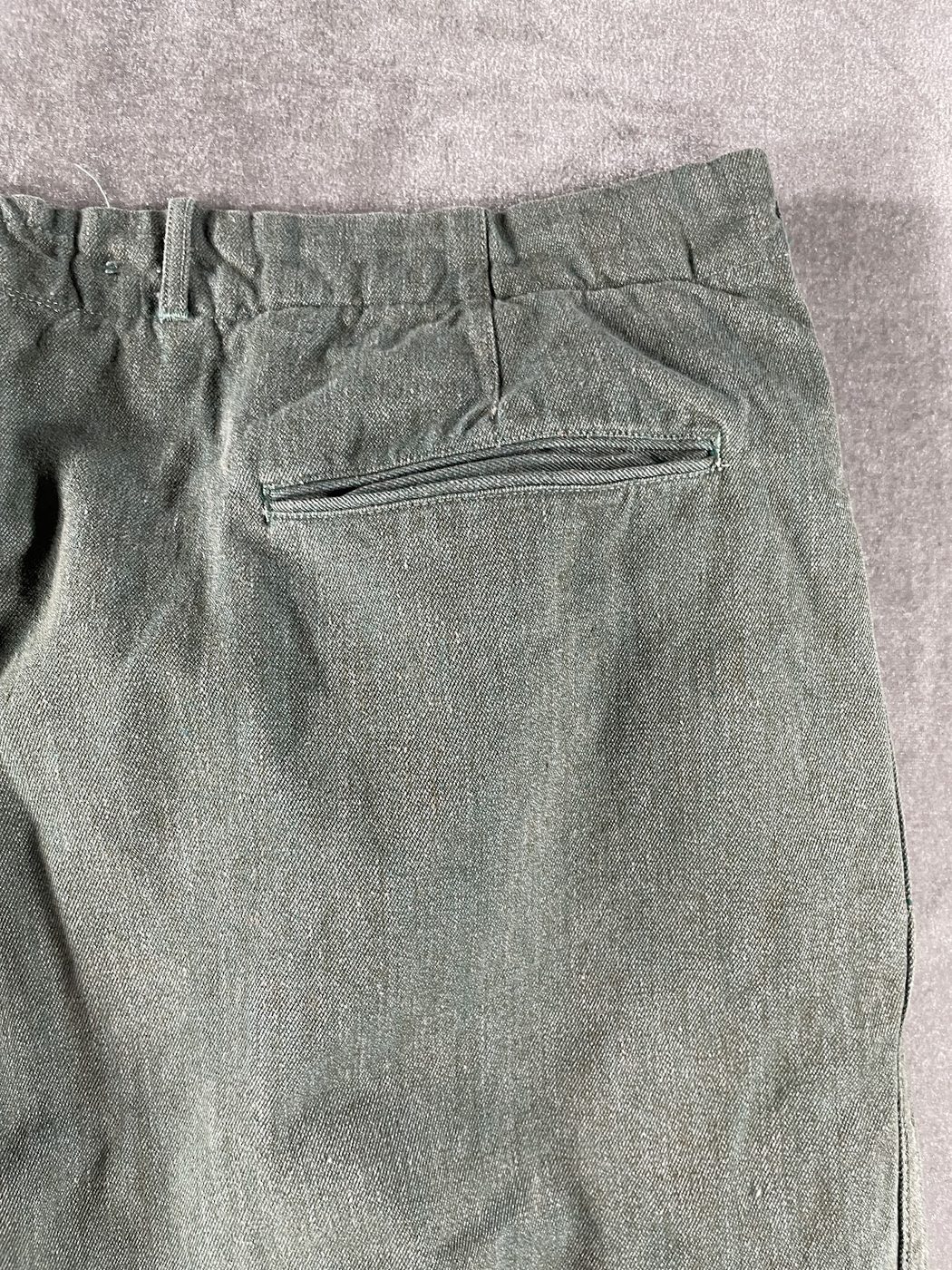
3. "Prisoner pants"?
In the vintage trade, Swedish trousers like these are often sold as "prisoner pants". We have not found a reliable source that ties this pair, or this tag, to prison use. So we call them what the tag supports: Fristads work trousers.
What we cannot tell you
The tag has no date. Our shop places this pair around the 1980s, from the cloth, the fading and the tag style. That is our judgment, not something printed on the trousers.
Condition, honestly
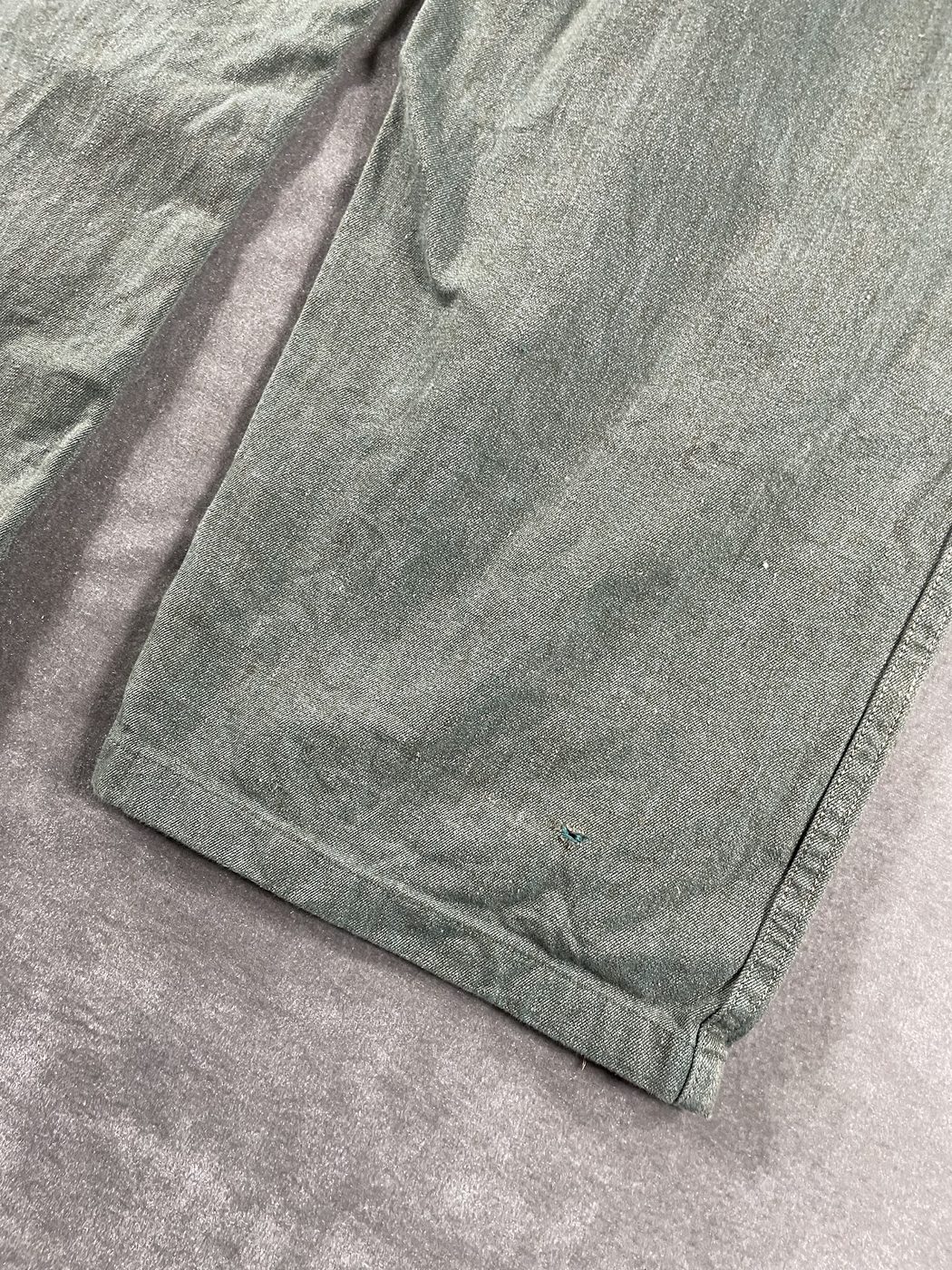
There is a small hole near one hem. The photos show the rest.
These trousers are in our shop
We run a small vintage shop in Kawagoe, Japan (Old Pawn Notes and the shop are run by the same people). Waist 96 cm, rise 35 cm, inseam 72 cm.
Sources
This guide was drafted with AI assistance from our own notes and photos, then checked by the shop owner. Every photo shows a real piece we handled. Any diagrams are simple drawings and are labelled as diagrams.