Reading Japanese clothing labels
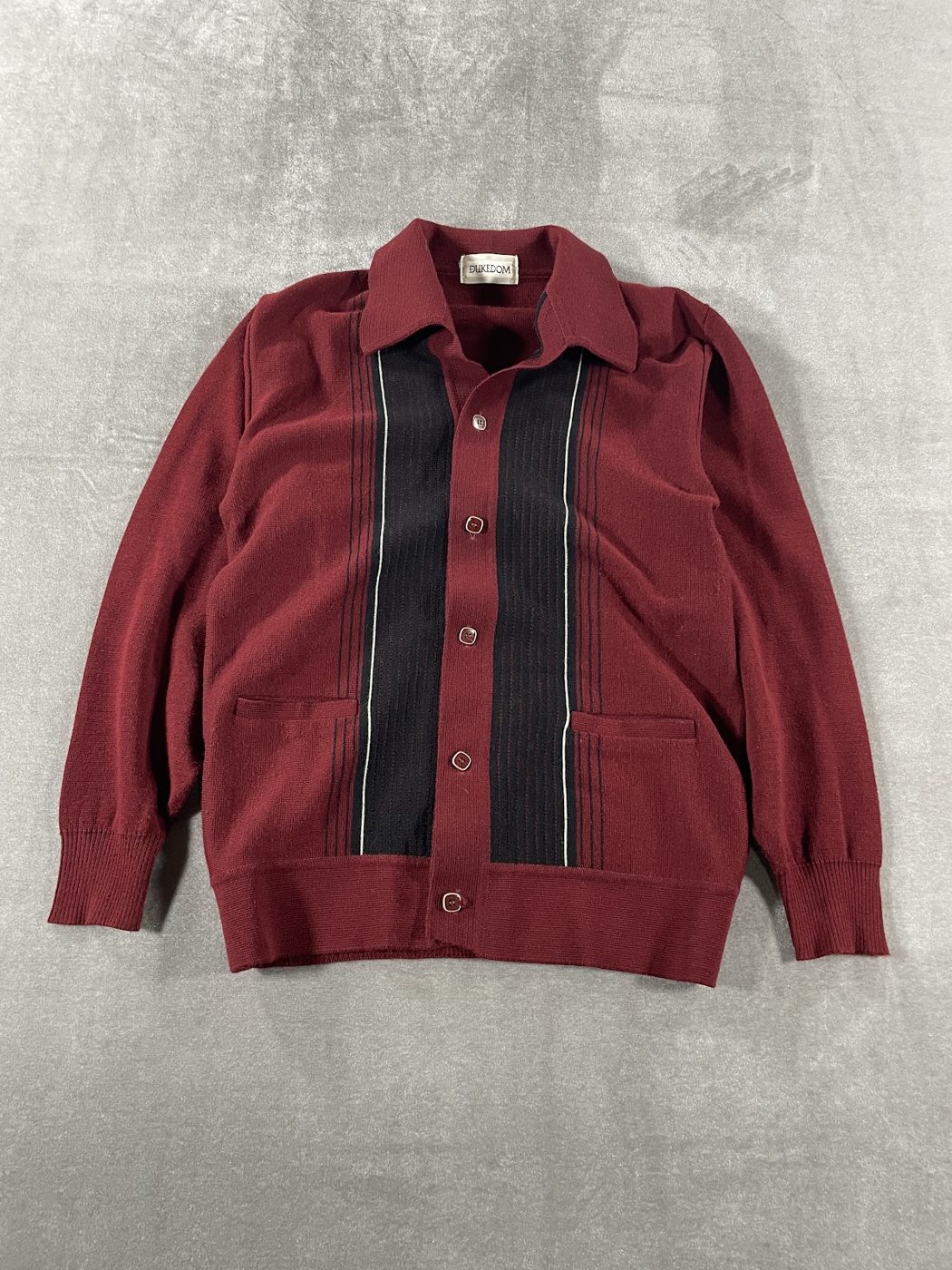
Vintage clothing made for the Japanese market carries its facts in Japanese. Two small labels do most of the work: one for the fiber content, one for washing. This guide reads both on a real piece from our shop, a knit cardigan labelled DUKEDOM and made in Japan, and explains the one detail that helps you date it.
Short answer: 品質表示 is the fiber label (アクリル is acrylic, 毛 is wool, 綿 is cotton) and 日本製 means made in Japan. 取扱い方 is the care label. If the care symbols have Japanese words inside them, such as 手洗イ in a wash tub, they are Japan's old symbols, which were replaced on 1 December 2016, so the garment was made before then.
1. The brand label at the neck
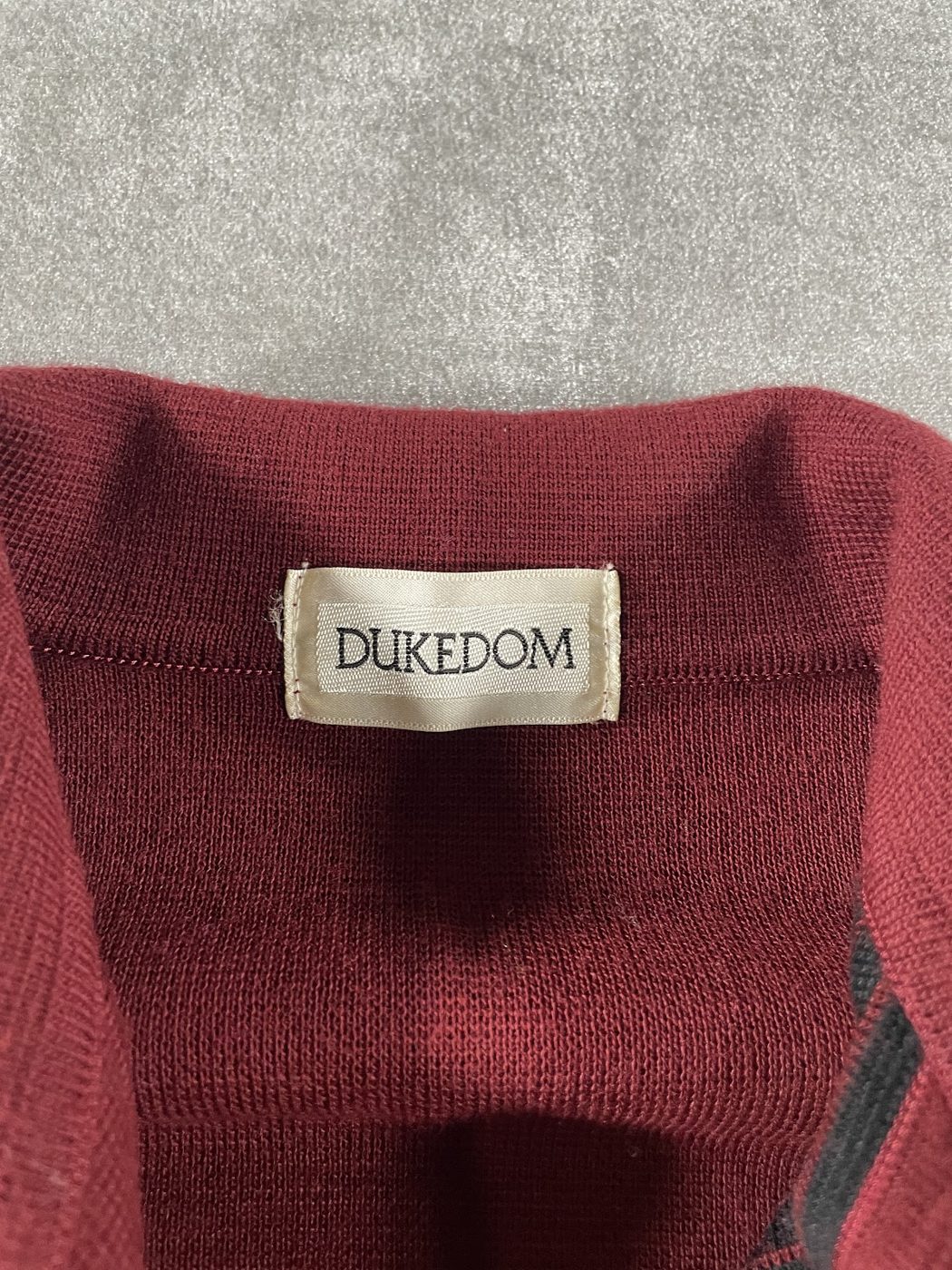
Many Japanese labels from past decades use English or English-sounding names, so the brand label alone does not tell you the country. We could not find a reliable history of DUKEDOM, so we do not guess at one. The labels further down tell you more.
2. The fiber label: 品質表示
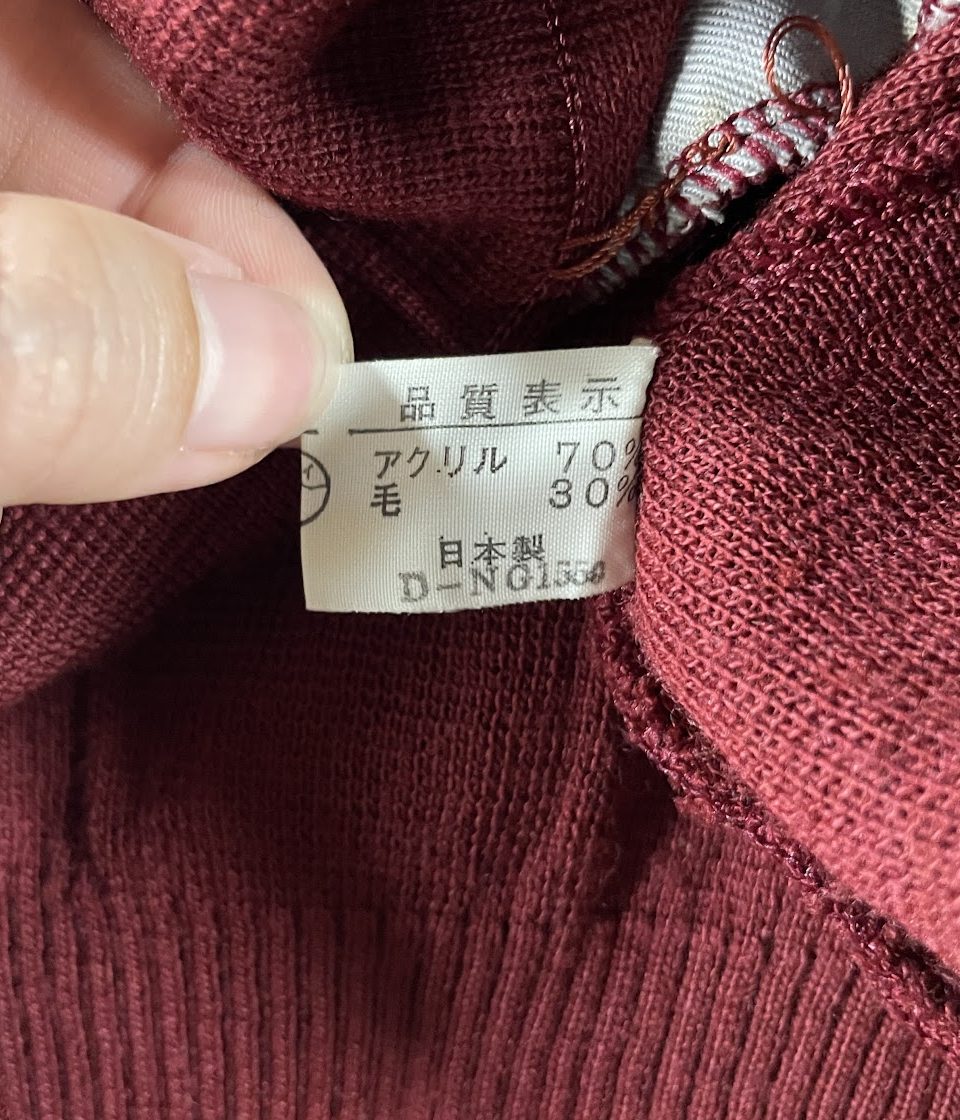
| Japanese | Reading | Meaning |
|---|---|---|
| 品質表示 | hinshitsu hyōji | Quality label (fiber content) |
| アクリル | akuriru | Acrylic |
| 毛 | ke | Wool |
| 綿 | men | Cotton |
| 日本製 | nihon-sei | Made in Japan |
This one reads acrylic 70%, wool 30%, made in Japan, with a style code underneath. In our experience, acrylic and wool knits like this keep their shape well over the years.
3. The care label: 取扱い方, and the date clue
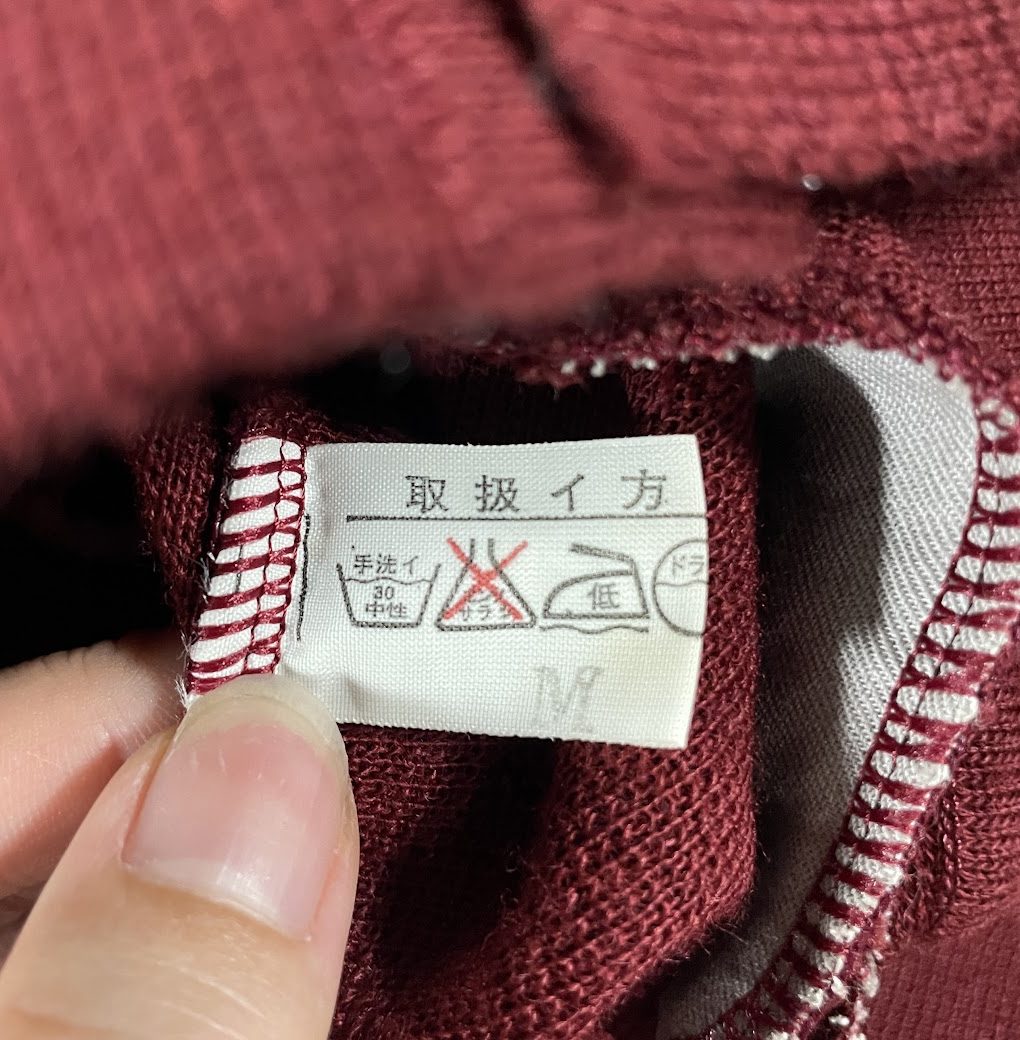
Read from left to right:
- A wash tub with 手洗イ, 30 and 中性. Hand wash at up to 30°C with a mild (neutral) detergent.
- A flask crossed out. No chlorine bleach.
- An iron with 低. Iron on low heat.
- A circle with ドライ. Dry cleaning is fine.
The date clue is the style of the symbols. Japan used its own care symbols, with Japanese words written inside them, until it switched to the international ISO 3758 symbols on 1 December 2016. The number of symbols went from 22 to 41 (Japan's Ministry of Economy, Trade and Industry). So a care label like this one, with 手洗イ inside the tub, tells you the piece was made before that date.
That is the only thing the symbols prove. They do not say how much earlier.
What we think, and what we cannot prove
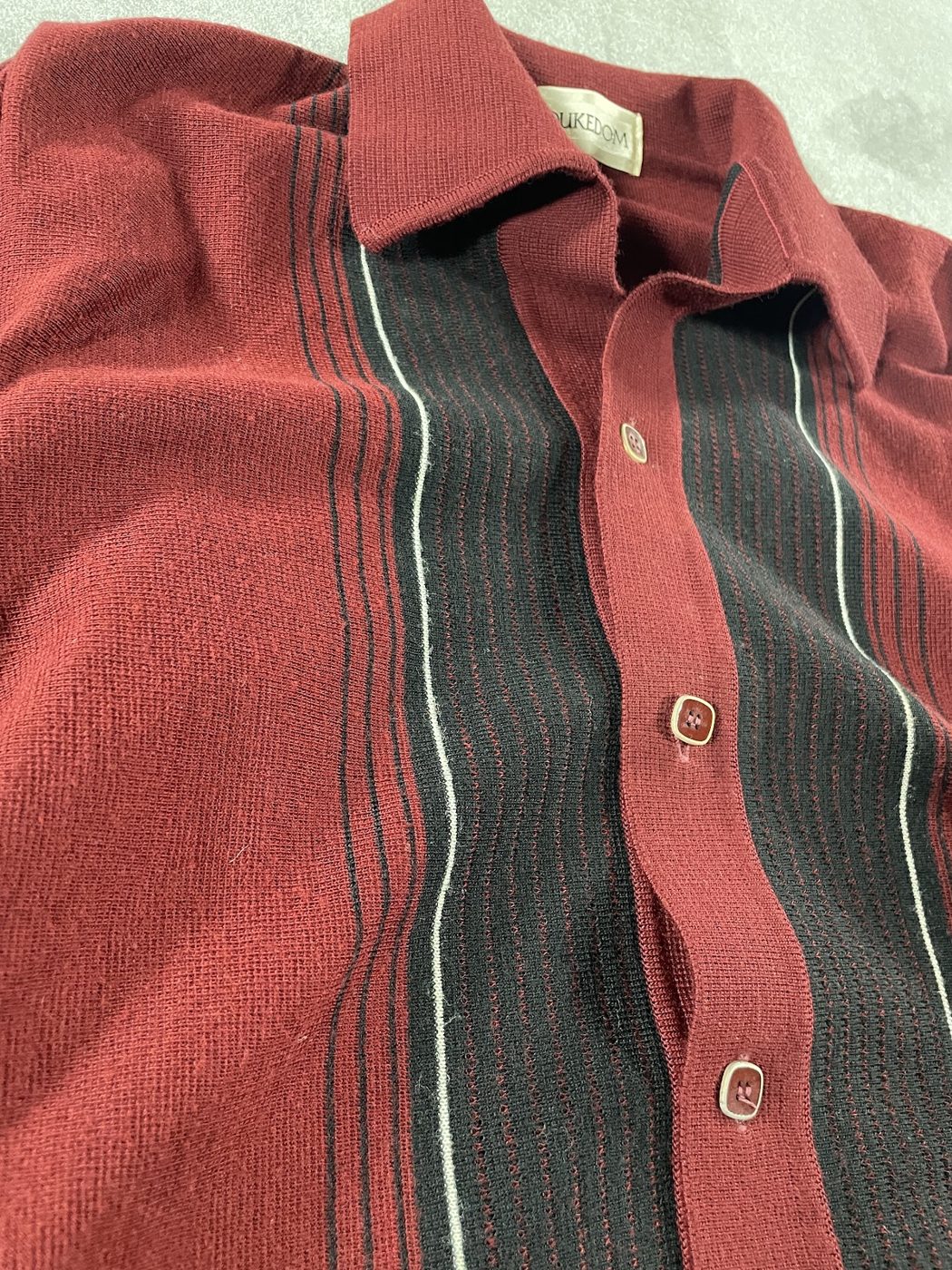
From the shirt collar, the bowling-shirt layout of the front and the style of the labels, our shop dates this cardigan to around the late 1960s to 1970s. That is our judgment from handling many similar pieces. The labels themselves only prove that it was made in Japan, before December 2016.
This cardigan is in our shop
We run a small vintage shop in Kawagoe, Japan, and this cardigan is for sale there (Old Pawn Notes and the shop are run by the same people). It measures 47 cm across the chest and 63.5 cm long. The shop page is in English; the detailed description is still in Japanese.
Sources
This guide was drafted with AI assistance from our own notes and photos, then checked by the shop owner. Every photo shows a real piece we handled. Any diagrams are simple drawings and are labelled as diagrams.