Reading a US military clothing label: contract, stock number and size
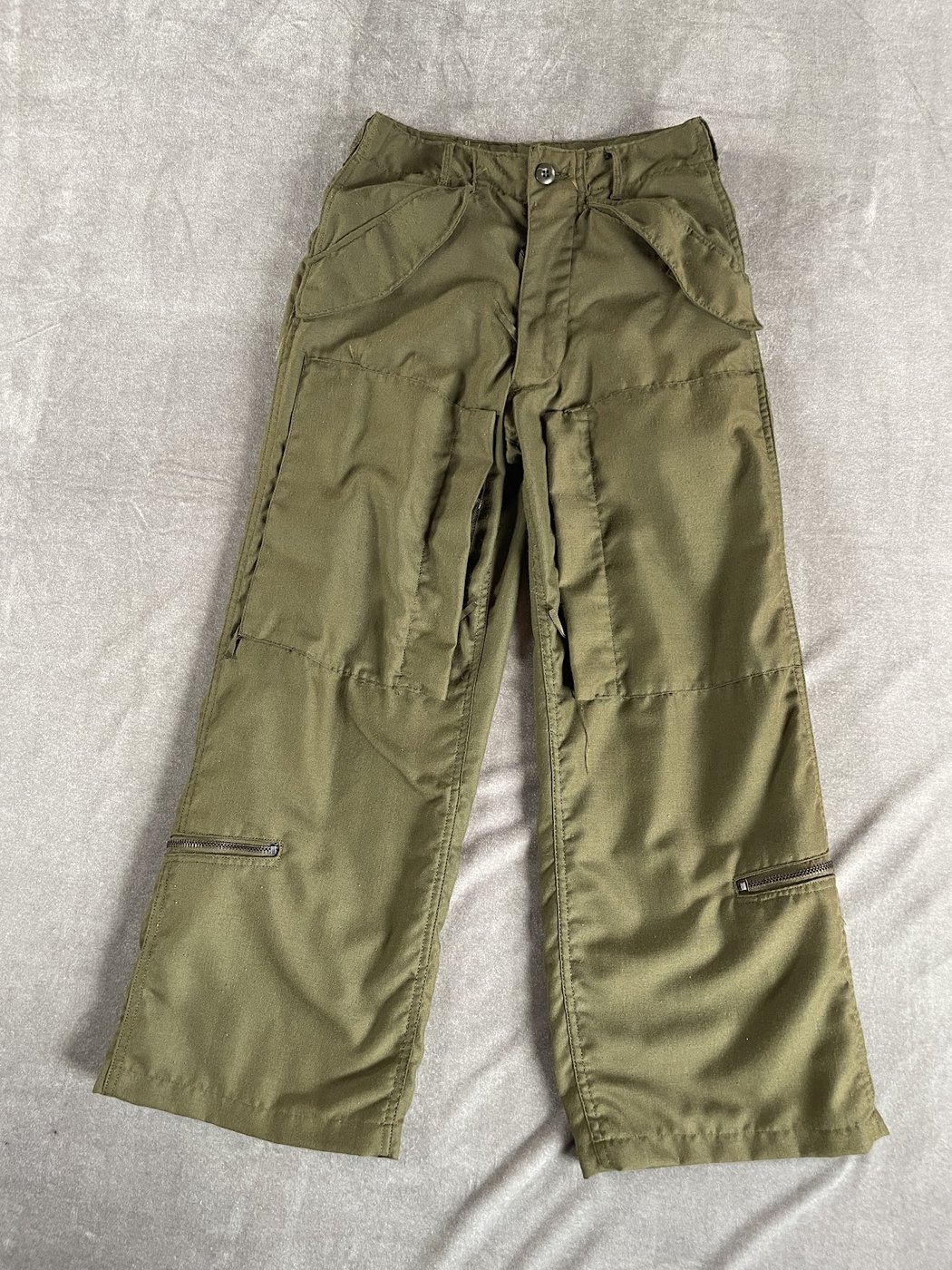
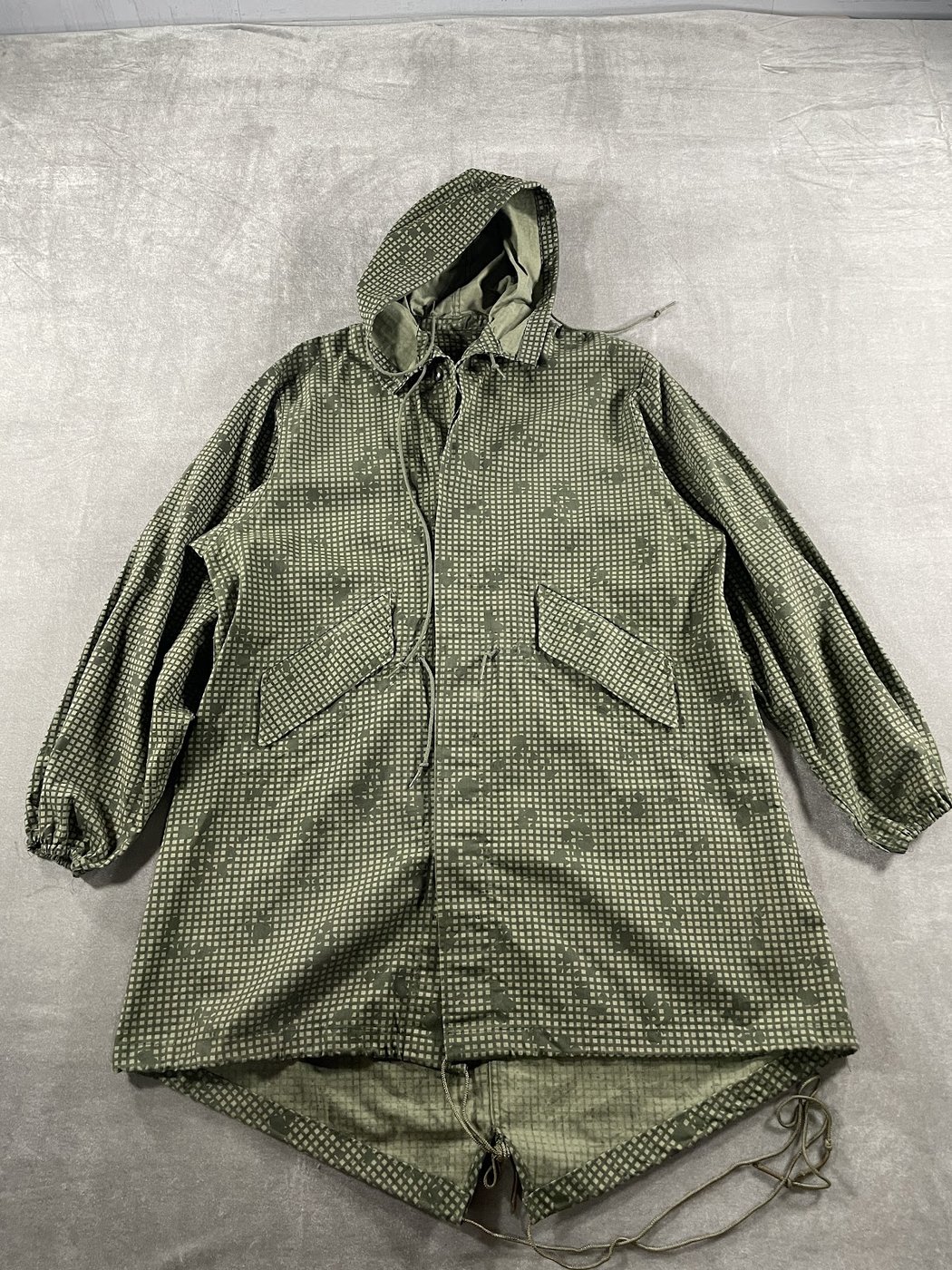
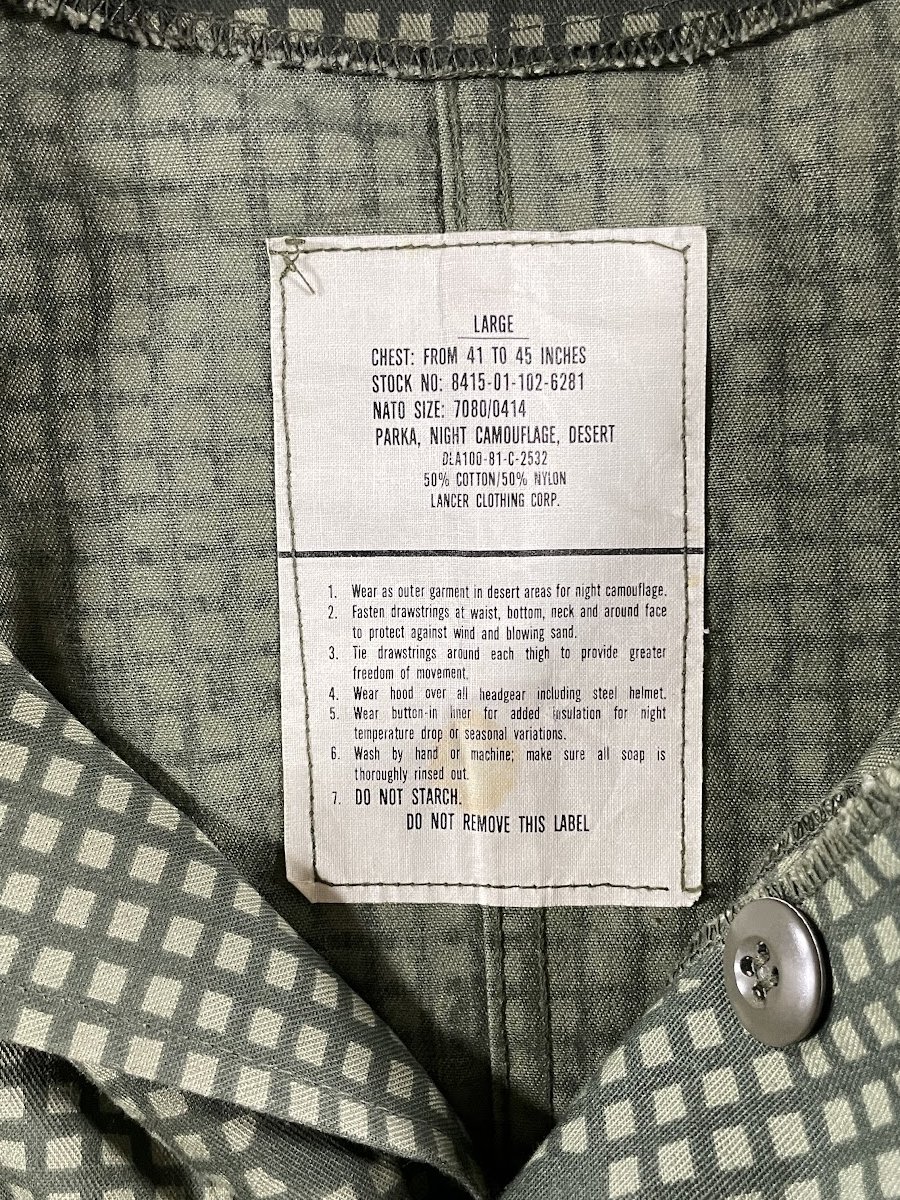
Most old US military clothing carries a small printed label that looks like a wall of codes. It is easier to read than it looks. Here we read it line by line from two pieces in our shop in Japan: a pair of nylon flight trousers and a desert night camouflage parka, made about ten years apart.
Short answer: look for the contract number first (for example DSA100-71-C-1467). The two digits after the agency code are the fiscal year of the contract, which puts the piece close to its year of making. Then check the stock number: an 11-digit number points to before about 1974, and a 13-digit number with 00 or 01 in the middle points to after.
1. The name line: what the item is
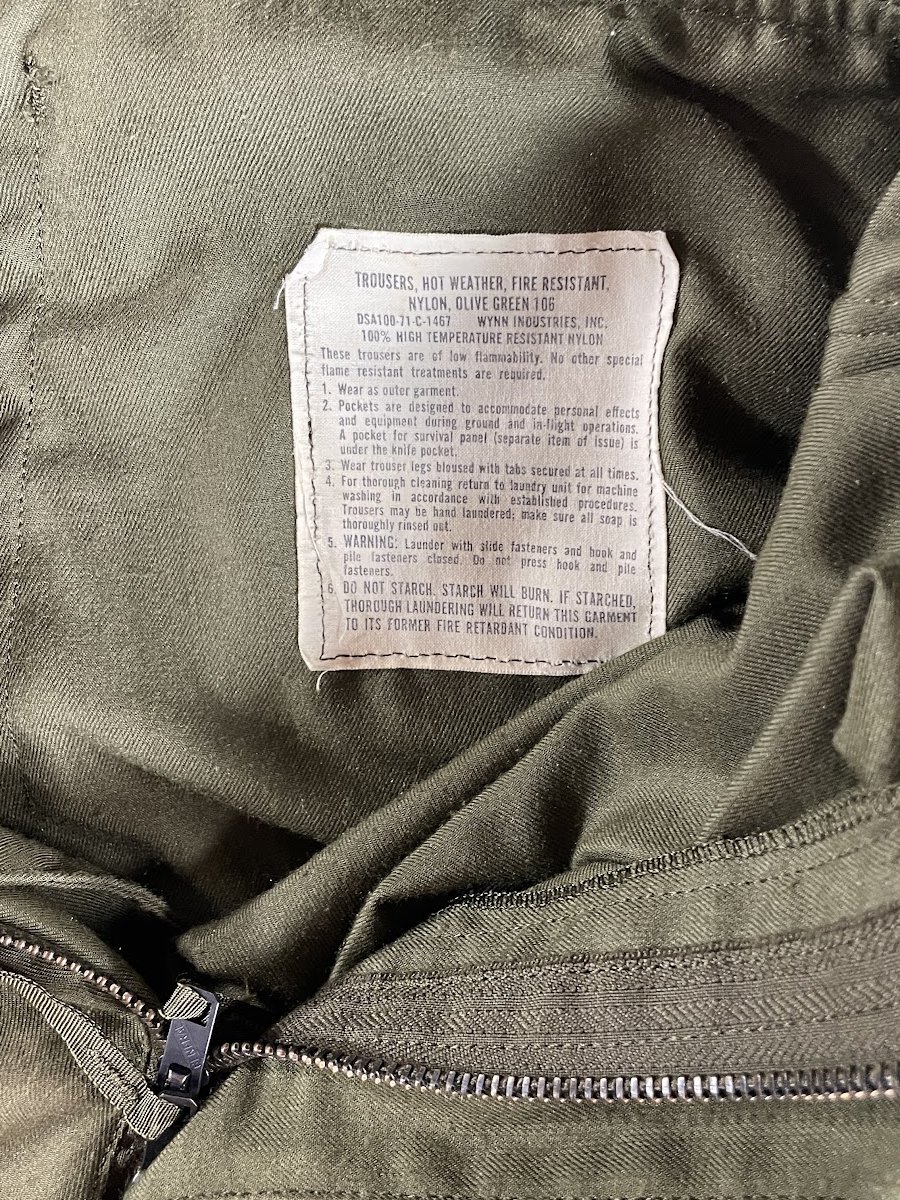
The item name is written backwards, the way a supply catalogue lists it: the noun first, then the details. The trousers say TROUSERS, HOT WEATHER, FIRE RESISTANT, NYLON, OLIVE GREEN 106. The parka says PARKA, NIGHT CAMOUFLAGE, DESERT. This line tells you what the piece was meant to be, which matters more than any name a seller gives it later.
The instructions below it add more. The trousers label talks about pockets for "ground and in-flight operations" and warns "DO NOT STARCH. STARCH WILL BURN." The parka label says "Wear as outer garment in desert areas for night camouflage."
2. The contract number: the closest thing to a date
Each label carries a contract number. On our two pieces:
- Trousers:
DSA100-71-C-1467, maker Wynn Industries, Inc. - Parka:
DLA100-81-C-2532, maker Lancer Clothing Corp.
Read it in four parts:
- DSA100 / DLA100: the buying office. DSA is the Defense Supply Agency. It was renamed the Defense Logistics Agency (DLA) on 1 January 1977 (DLA history). So a
DSAlabel points to before 1977 and aDLAlabel to 1977 or later. - 71 / 81: the fiscal year of the contract (a collector's guide to these numbers).
- C: the type of agreement, here a contract.
- 1467 / 2532: the serial number of that contract.
A fiscal year is not a date of making. Clothing was usually made under the contract in that year or the next, so we write "around 1971" and "around 1981", not an exact year.
3. The stock number: old style and new style
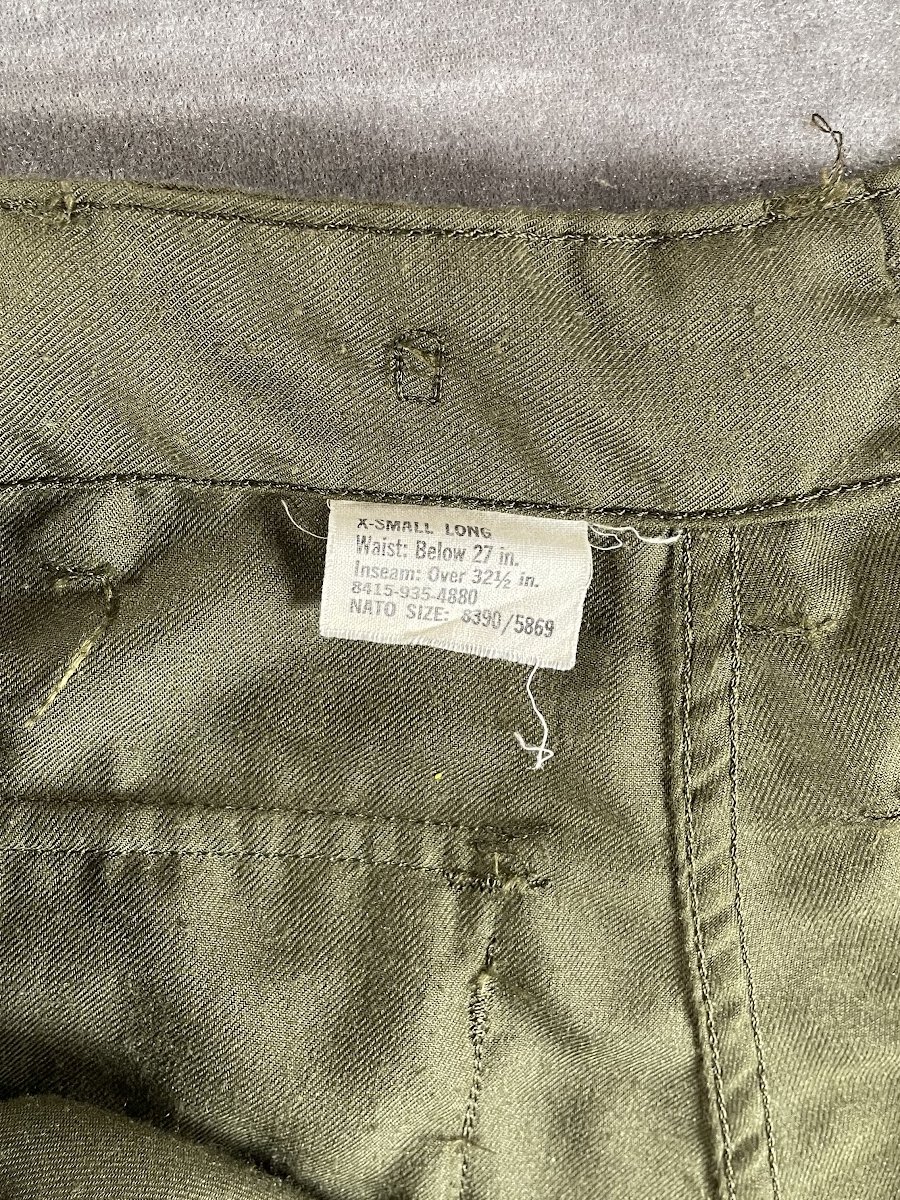
The stock number is the item's catalogue number. Put the two side by side:
- Trousers:
8415-935-4880(11 digits) - Parka:
8415-01-102-6281(13 digits)
The first four digits, 8415, are the supply class. On both pieces it is the class for special-purpose clothing (EverySpec: FSC 8415).
The difference is the two digits added in the middle of the parka's number. In 1974 the older 11-digit Federal Stock Number was replaced by the 13-digit NATO Stock Number, which adds a two-digit country code. For the United States that code is 00 or 01 (Wikipedia: NATO Stock Number). Our trousers have the old style and our parka the new style, which agrees with their contract years.
This is a useful second check. If a label says DSA100-71 but shows a 13-digit stock number, or the other way round, look more closely.
4. The size line and the NATO size
The size is written in words and inches: "X-SMALL LONG, Waist: Below 27 in., Inseam: Over 32½ in." on the trousers, and "LARGE, CHEST: FROM 41 TO 45 INCHES" on the parka. Below it is a NATO size (8390/5869 and 7080/0414), a coded size shared between NATO countries.
The label size is the size of the person, not of the garment. The parka is a Large for a 41–45 inch chest, but we measure it at 67 cm across (about 26 inches, so about 53 inches around), because it was cut to go over other layers. Always measure.
What we cannot tell you
We do not decode the NATO size numbers here. We have not found a reliable public source that explains them, and we would rather leave them unexplained than guess.
A label tells you which contract a piece was made under, not where it went. We cannot tell you which unit wore these pieces, or whether they were ever worn in service. The trousers are often called "helicopter crew" trousers by sellers; the label itself only says they were for ground and in-flight use.
One thing does not add up. The trousers' label says "Long" with an inseam over 32½ inches (about 82 cm), but we measure the inseam at 64 cm. We cannot explain the gap from the label alone, so go by the measurements, not the size on the label.
Condition, honestly
The trousers: the lining of the lowest pocket near the ankle is torn, so it cannot hold anything, and the end of the waistband is fraying. The parka: some seams are coming loose, there is some discoloration, and the drawstrings are worn.
Both pieces are in our shop
We run a small vintage shop in Kawagoe, Japan (Old Pawn Notes and the shop are run by the same people). The trousers measure 66 cm at the waist and 64 cm inseam. The parka measures 67 cm across the chest and 111 cm long. The shop pages are in English; the detailed descriptions are still in Japanese.
See the 1971 flight trousers · See the 1981 desert night parka
Sources
- Defense Logistics Agency: History of DLA (the renaming from Defense Supply Agency in 1977)
- Wikipedia: NATO Stock Number (structure and the US country codes)
- EverySpec: FSC 8415, Clothing, Special Purpose
- Musings from the author of American Web Equipment 1967–1991: reading contract (PII) numbers
This guide was drafted with AI assistance from our own notes and photos, then checked by the shop owner. Every photo shows a real piece we handled. Any diagrams are simple drawings and are labelled as diagrams.