No label, still good: reading an unbranded leather vest
A black leather vest is one of the easiest pieces to find in vintage and one of the hardest to judge, because so many have no label. This one, from our shop in Japan, has none. Here is how we read it from the details instead.
Short answer: on a leather vest without a label, look at the yokes (the shaped panels across the chest and shoulders), the pockets, the side adjusters and the lining. Separate yokes, two kinds of pockets, buckled side tabs and a patterned lining all mean extra cutting and sewing. They tell you about the work that went in, not the maker or the year.
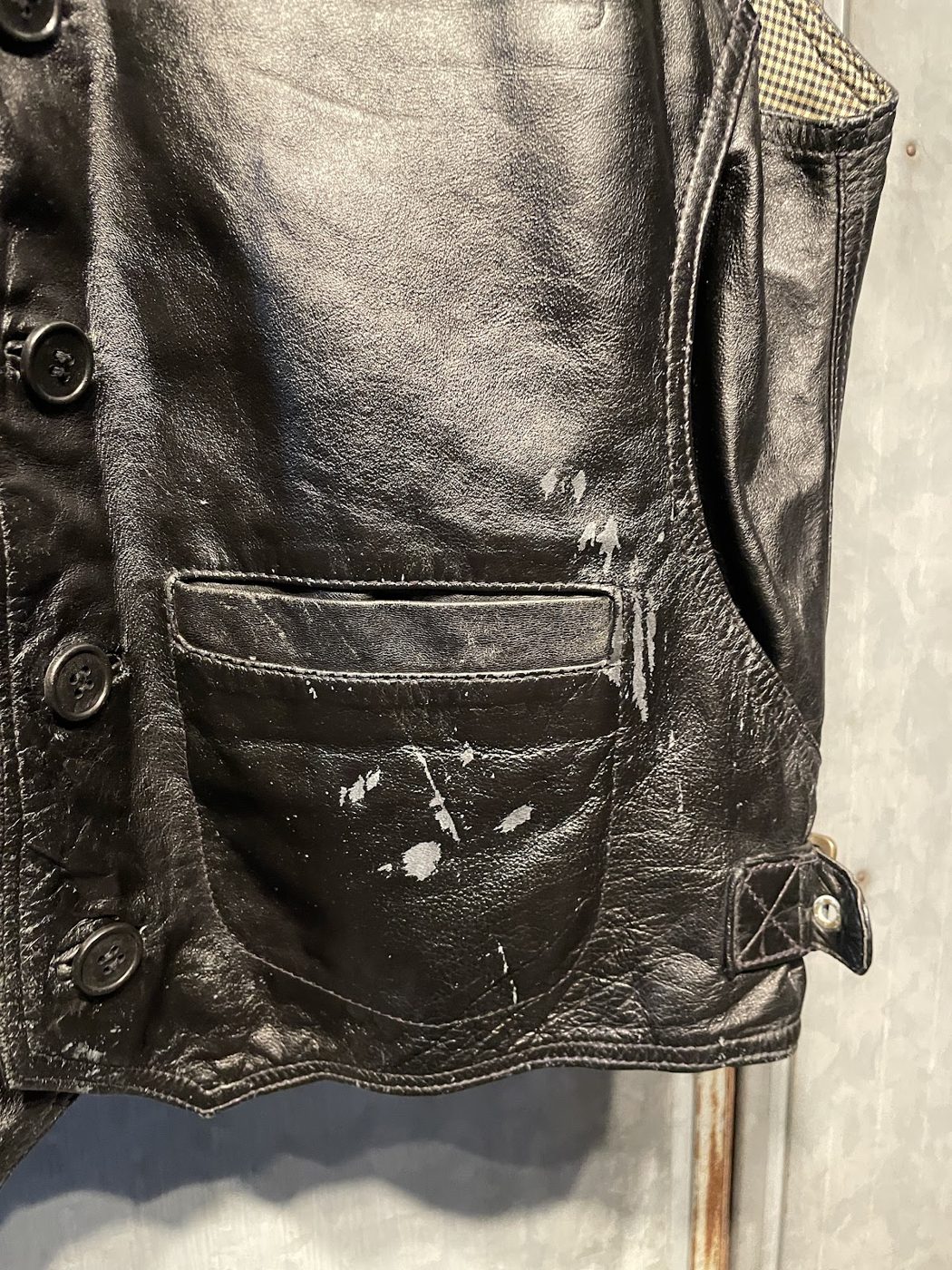
1. The yokes: shaped panels front and back
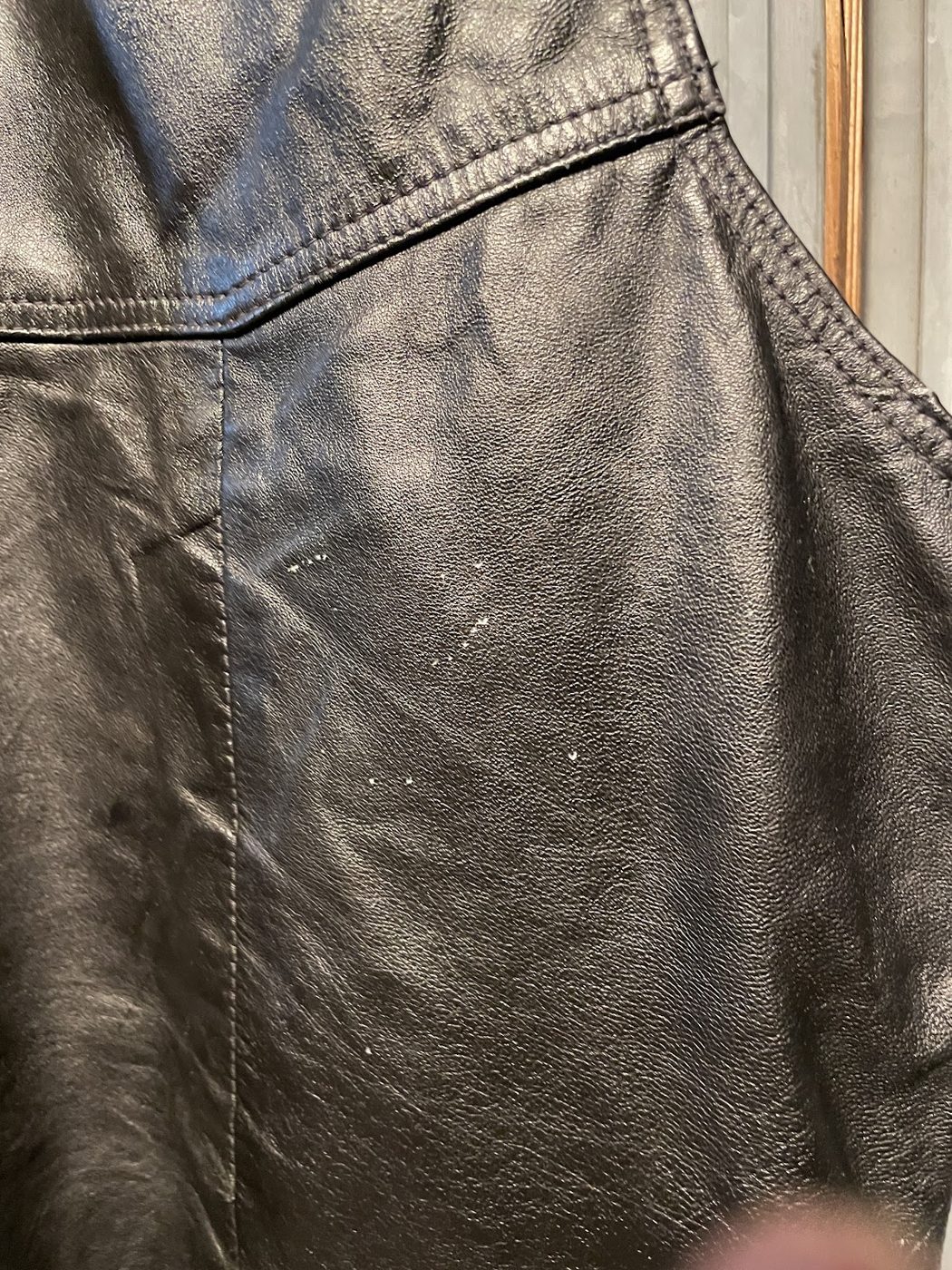
A yoke is a shaped pattern piece that forms part of a garment, usually across the neck and shoulders (Wikipedia: Yoke). This vest has pointed yokes across the chest, and the back is pieced from several panels. More panels mean more cutting and sewing, and the pointed shape gives the vest a western look.
2. The pockets: two different kinds
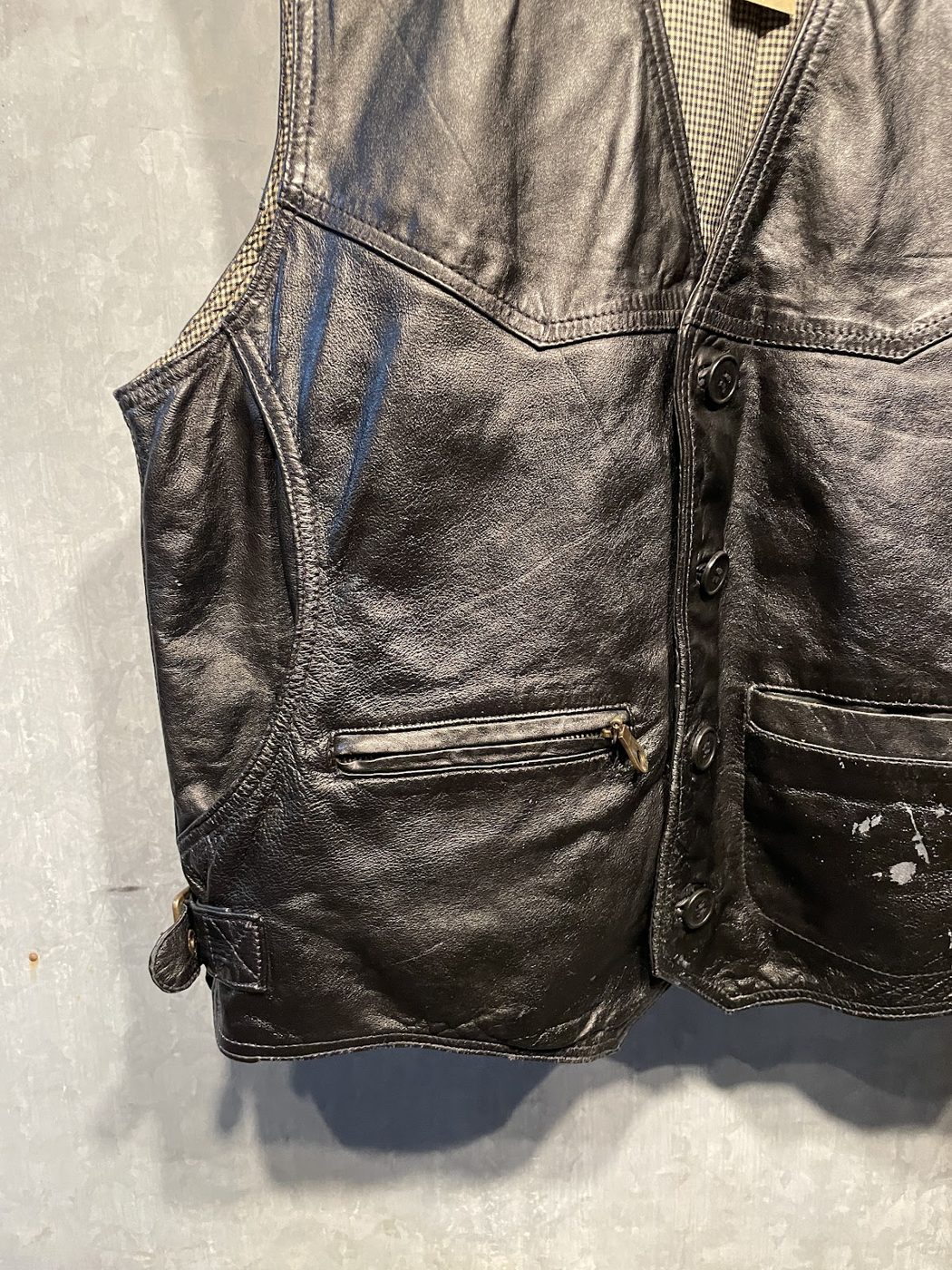
One side has a zip pocket set into the leather, the other a patch pocket with a flap. Each side seam has a small leather tab with a metal buckle, so the waist can be pulled in. None of these parts are needed for a vest to work. They are there because someone chose to add them.
3. The lining
Inside, the vest is lined in a houndstooth check, which you can see at the armholes. In our experience, a patterned lining like this is one of the quickest signs that a vest was made with some care.
What we cannot tell you
With no brand, country or care label, we cannot name the maker or the country. From the cut and the details, our shop places it around the 1970s to 1980s. That is our judgment, not something written on the vest.
Condition, honestly
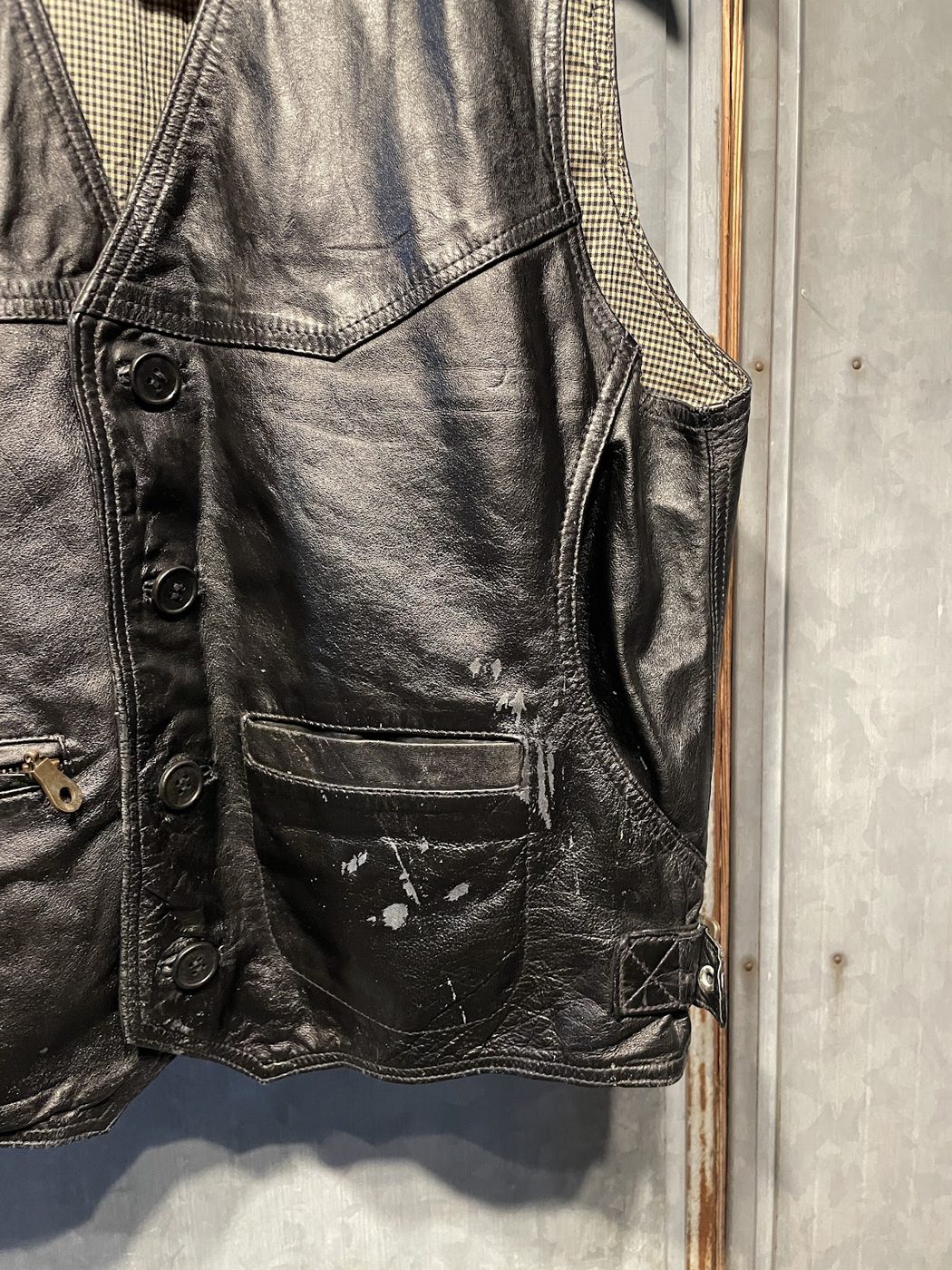
There are white paint-like marks on the lower front, and the metal buckles have rust.
This vest is in our shop
We run a small vintage shop in Kawagoe, Japan (Old Pawn Notes and the shop are run by the same people). It measures 52 cm across the chest and 59 cm long. The shop page is in English; the detailed description is still in Japanese.
Sources
This guide was drafted with AI assistance from our own notes and photos, then checked by the shop owner. Every photo shows a real piece we handled. Any diagrams are simple drawings and are labelled as diagrams.