No label, still good: reading an unbranded suede A-1 jacket
Most vintage jackets that reach our shop in Japan have a brand. This one does not. It is a goat-suede jacket cut in the style of the old A-1 flight jacket, and without a name on it, the only way to judge it is to read what is there: the care label, the size tag and the way it is put together.
Short answer: with no brand, judge an unbranded leather jacket by three things. The care label tells you the leather and the lining. The size tag tells you which market it was cut for. The construction (rib knit, buttons, pockets, seams) tells you how much work went into it. This one says goat suede, viscose lining, a European size 54, and a careful A-1 cut.
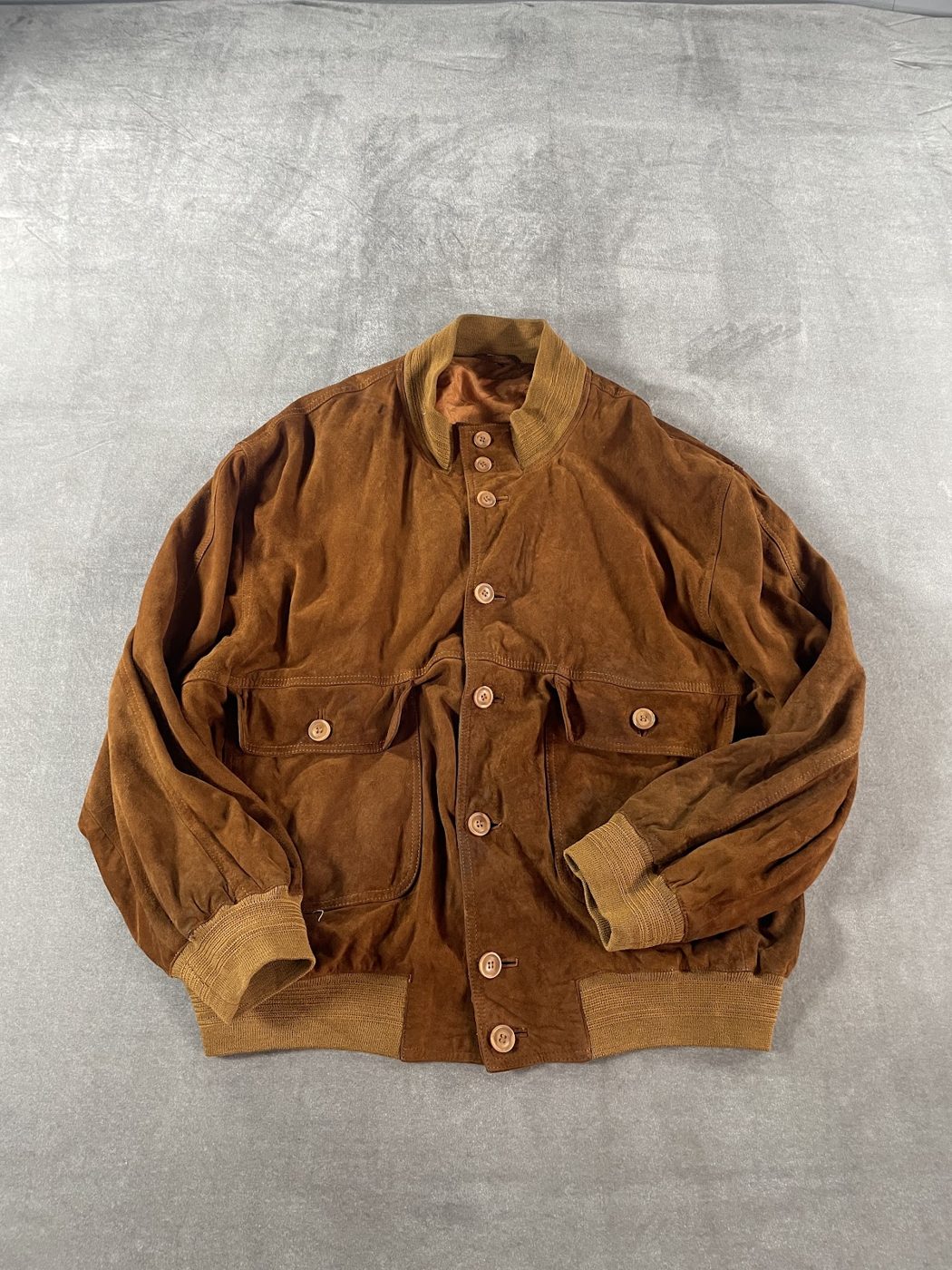
What "A-1 style" means
The A-1 is one of the first standard leather flight jackets of the US military, adopted in 1927. Its signs are a ribbed knit collar that stands up, knit cuffs and waistband, and a button front. The better-known A-2 that replaced it a few years later has a zip front and a flat leather collar (The Rake).
In 1935 the Italian company Valstar began making a suede jacket on the A-1 pattern, the Valstarino, and the style is often called after it (TRUNK Clothiers). In Japan, shops call this kind of jacket a "Valstar jacket" even when, like this one, it has no maker's name. That word describes the style. It does not mean the jacket was made by Valstar, and this one was not.
1. The care label: what it is made of
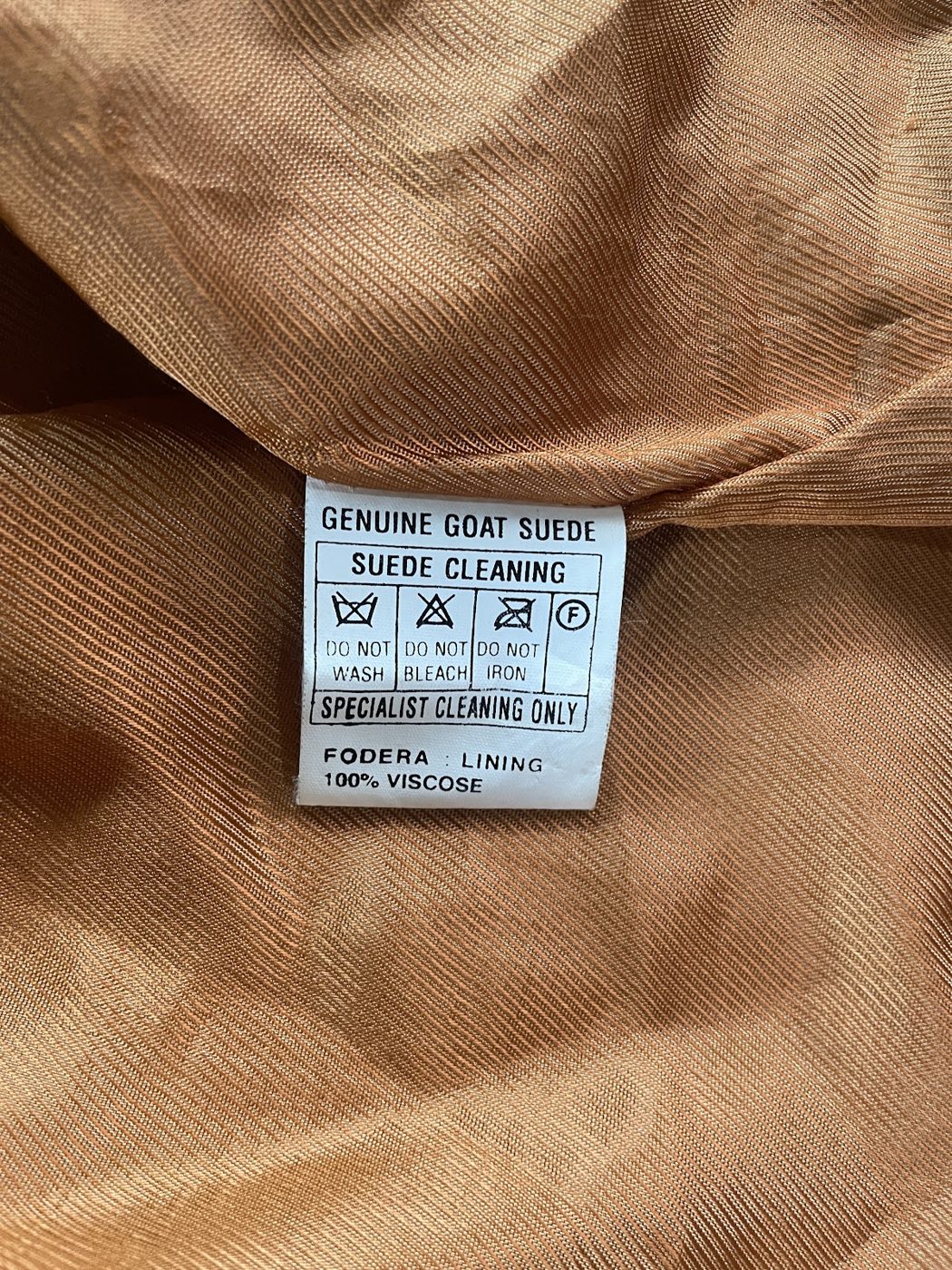
The label gives three useful facts.
- GENUINE GOAT SUEDE. The leather is goat, finished as suede. Goat suede has a short, soft nap and is lighter than most cow suede, which suits a jacket meant to drape.
- Do not wash, do not bleach, do not iron, SPECIALIST CLEANING ONLY. The symbols and the words agree: this goes to a leather cleaner, not a washing machine.
- FODERA LINING 100% VISCOSE. Fodera is Italian for lining. A label written partly in Italian suggests the jacket was made for the Italian or wider European market. It does not prove where it was sewn, so we do not claim a country.
2. The size tag: which market it was cut for
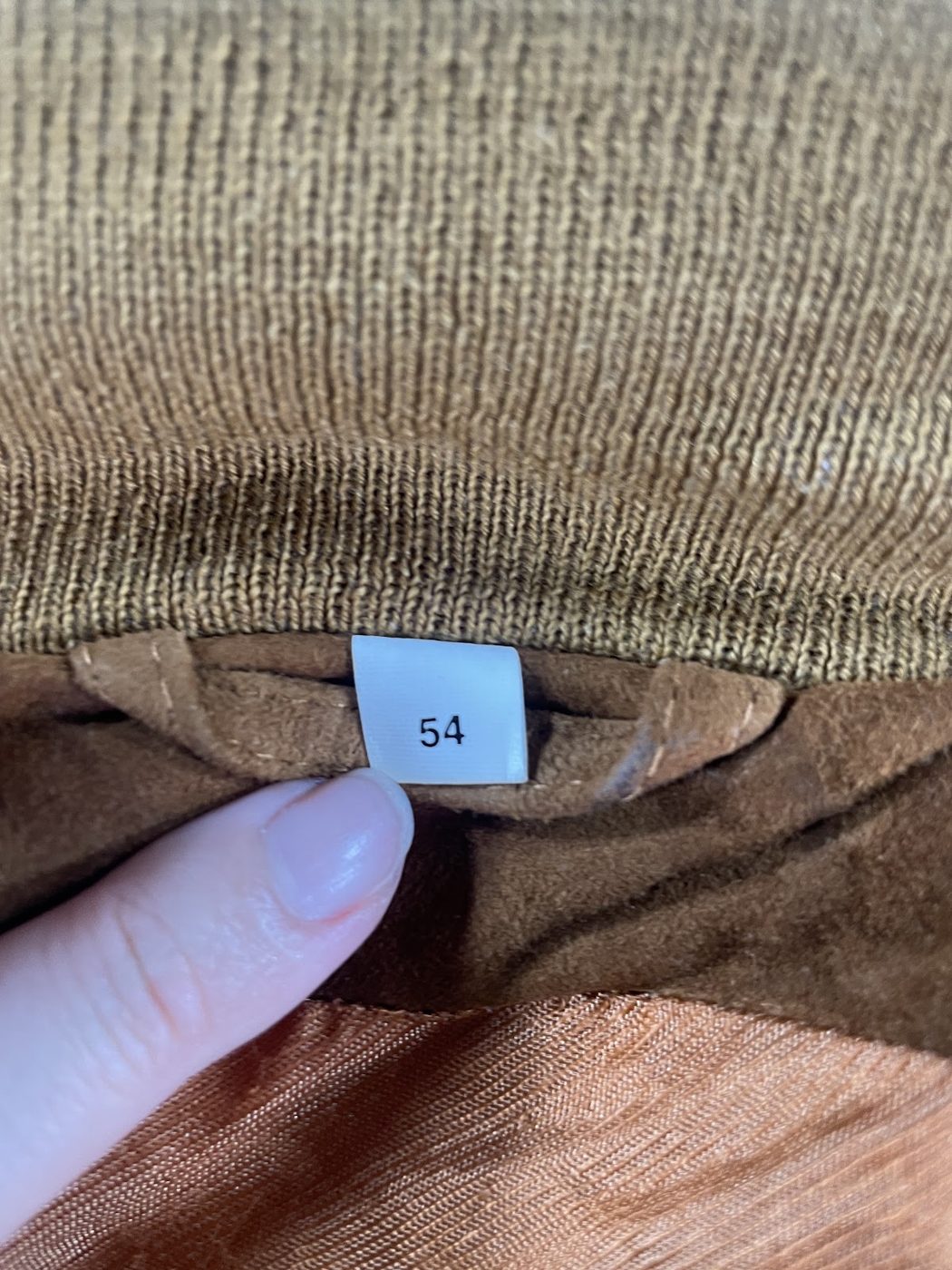
"54" is a European menswear size. It is a large size, but European numbers vary by maker, so we never sell on the number alone. Measured flat, this jacket is 65.5 cm across the chest and 67.5 cm long. Those two numbers tell you more than the tag.
3. The construction: how much work went into it
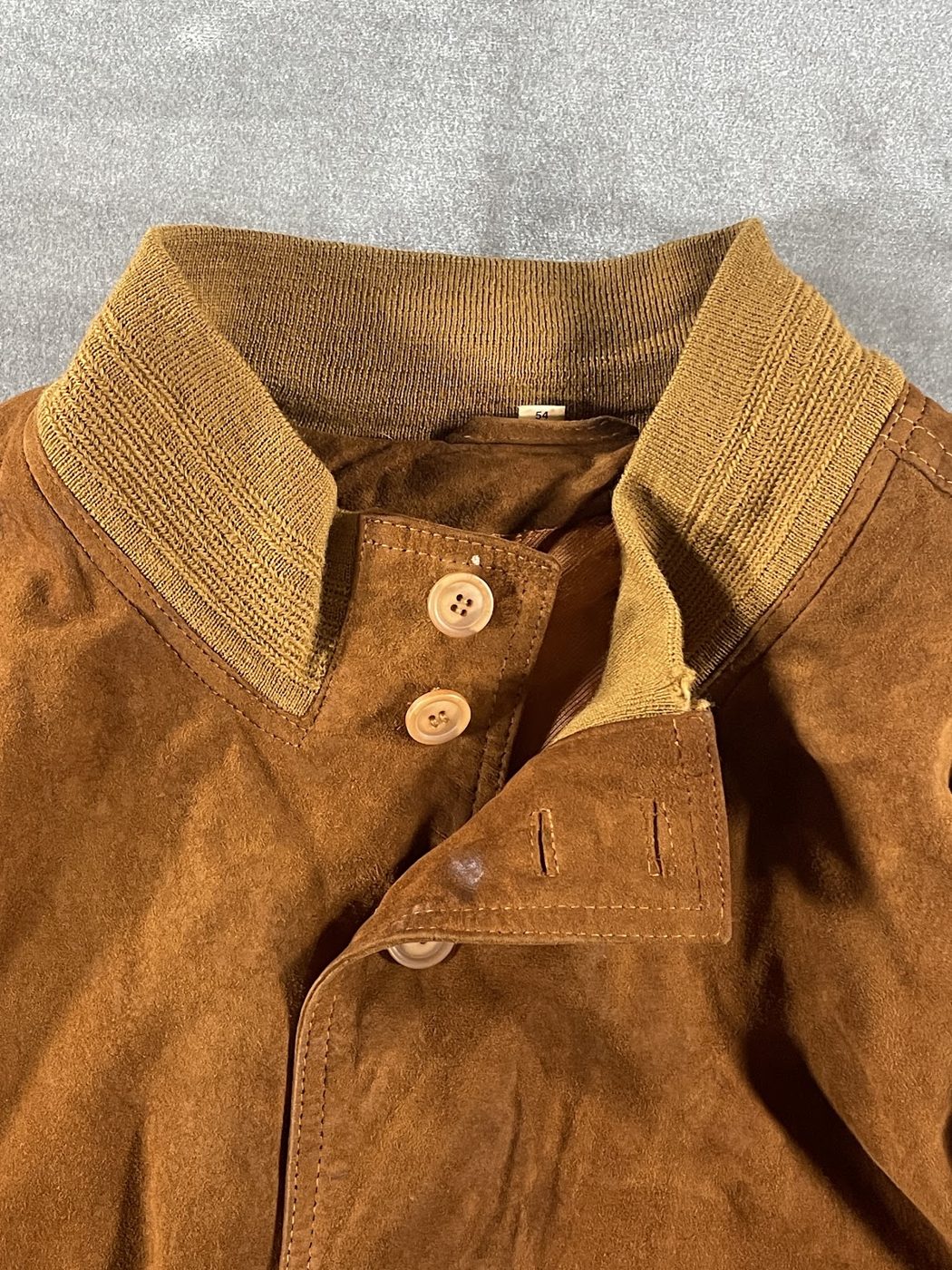
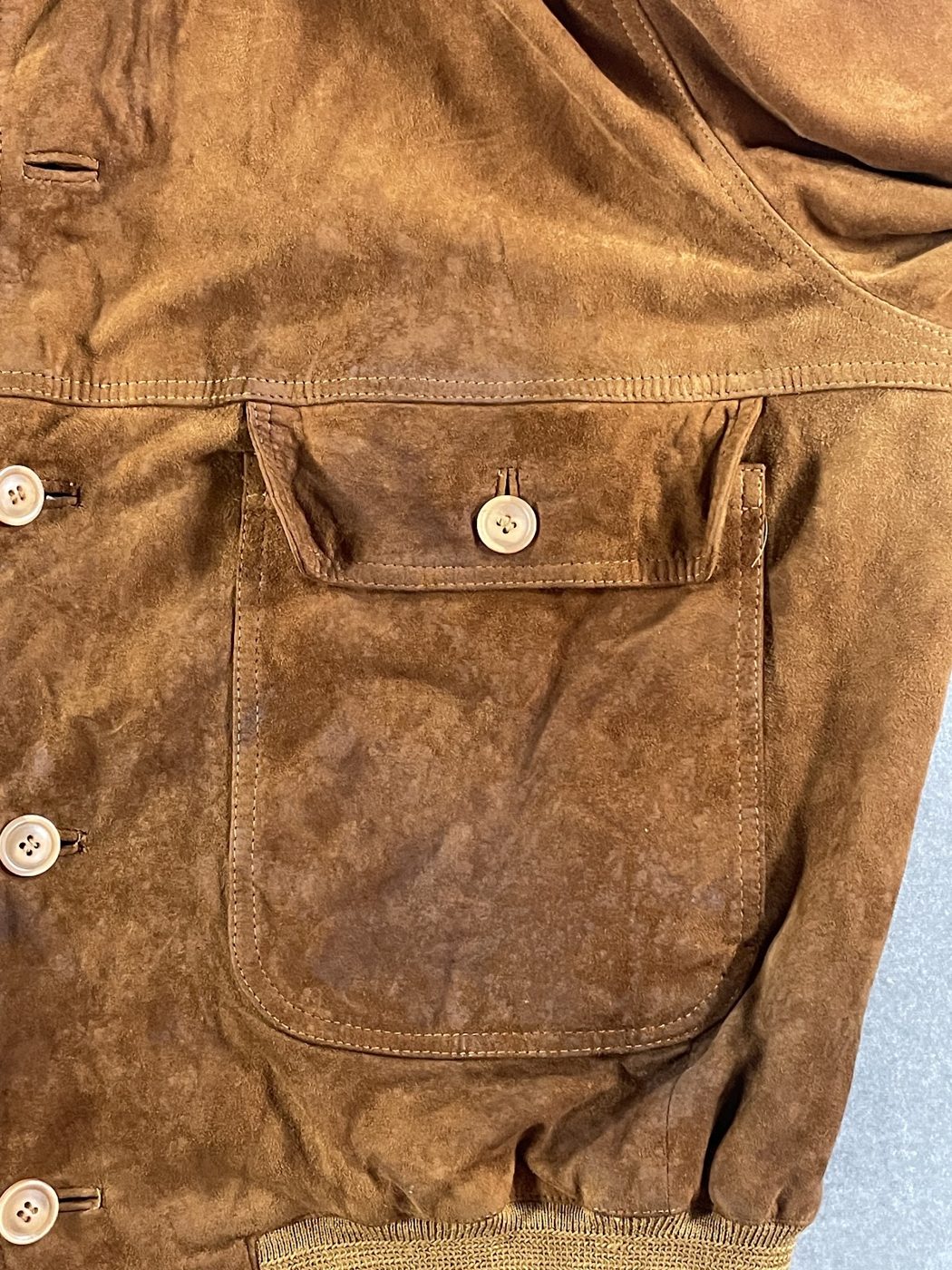
Things we look at on any leather jacket without a brand:
- The rib knit. Collar, cuffs and hem are a thick rib that has kept its shape. Thin rib that has gone wavy is the first thing to wear out on cheap copies.
- The front. Buttons, not a zip, which is right for the A-1 style. The buttons are sewn through the suede with a matching placket.
- The pockets. Patch pockets with buttoned flaps, stitched on, not printed or glued.
- The panels. The back has a seam across the shoulders. Joining panels lets the maker use the best parts of each skin.
What we cannot tell you
Without a brand, we cannot name the maker or give an exact year. From the materials and the cut, we place it around the 1980s to 1990s, and that is a judgment, not a fact on the label.
Condition, honestly
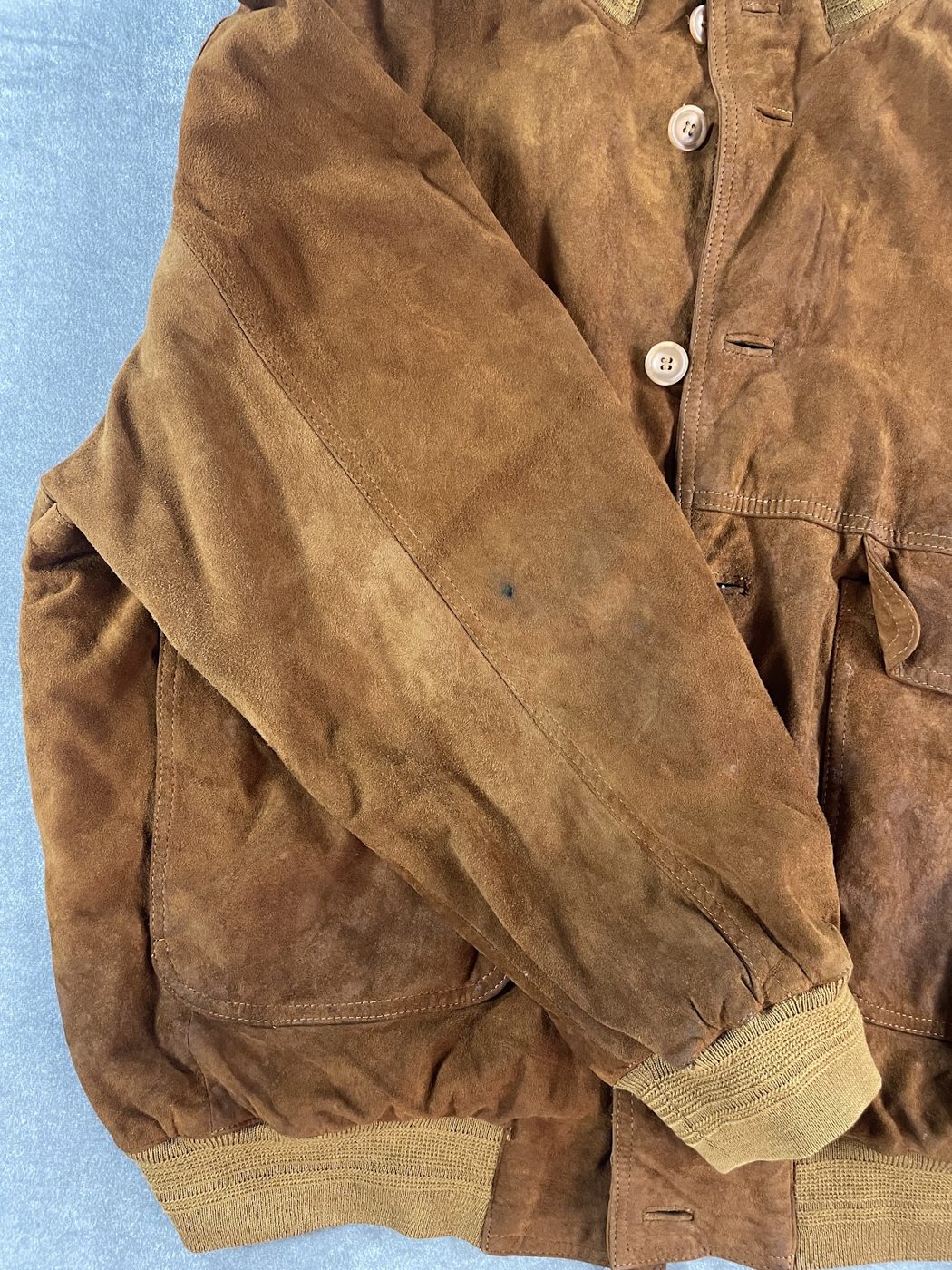
The color is uneven from age and wear, there is a small dark ink-like mark on the right sleeve, and a faint mark near the chest. The rib knit is in comparatively good shape.
This jacket is in our shop
We run a small vintage shop in Kawagoe, Japan, and this jacket is for sale there (Old Pawn Notes and the shop are run by the same people). The listing has all the measurements and more photos. The shop page is in English; the detailed description is still in Japanese.
Sources
This guide was drafted with AI assistance from our own notes and photos, then checked by the shop owner. Every photo shows a real piece we handled. Any diagrams are simple drawings and are labelled as diagrams.