Reading a German maker's label: West German army wool cargo trousers
These olive wool trousers came to our shop in Japan with no brand in the usual sense. What they have is a small cloth label inside, with a maker's name from Minden, West Germany, and lines of stamped numbers that have mostly faded. Here is how we read them.
Short answer: on old West German army trousers, the label usually names the contract maker and its town, not a brand. This pair says HCH. MUERMANN K.-G., MINDEN. Nothing on the label names the army, but if a pair like this is Bundeswehr issue, it cannot be older than November 1955, when the Bundeswehr was founded. The knee panels, buttoned cuffs and covered pockets show it was built for field use. The faded stamps are too worn to give a reliable date.
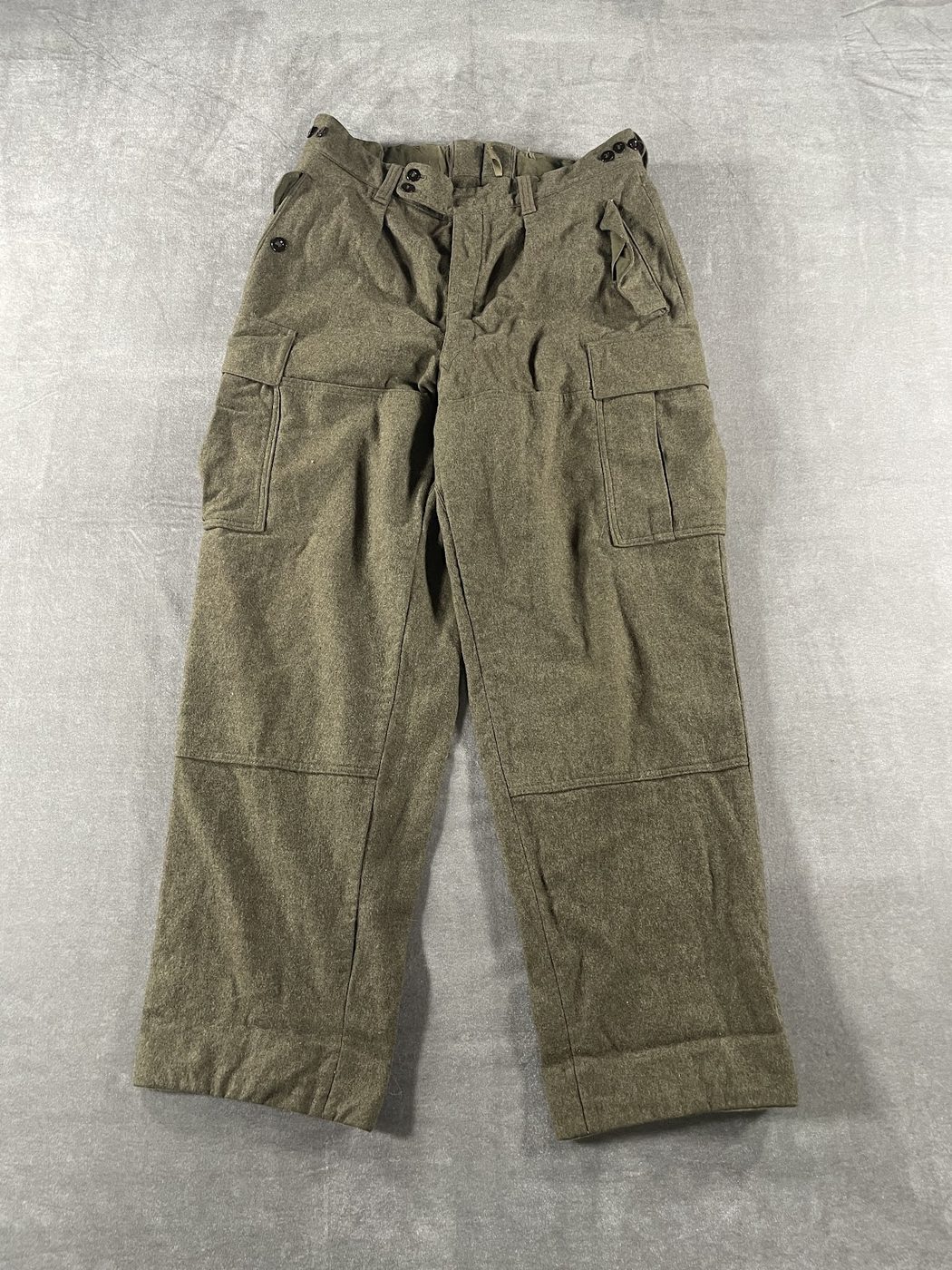
1. The label: a maker and a town, not a brand
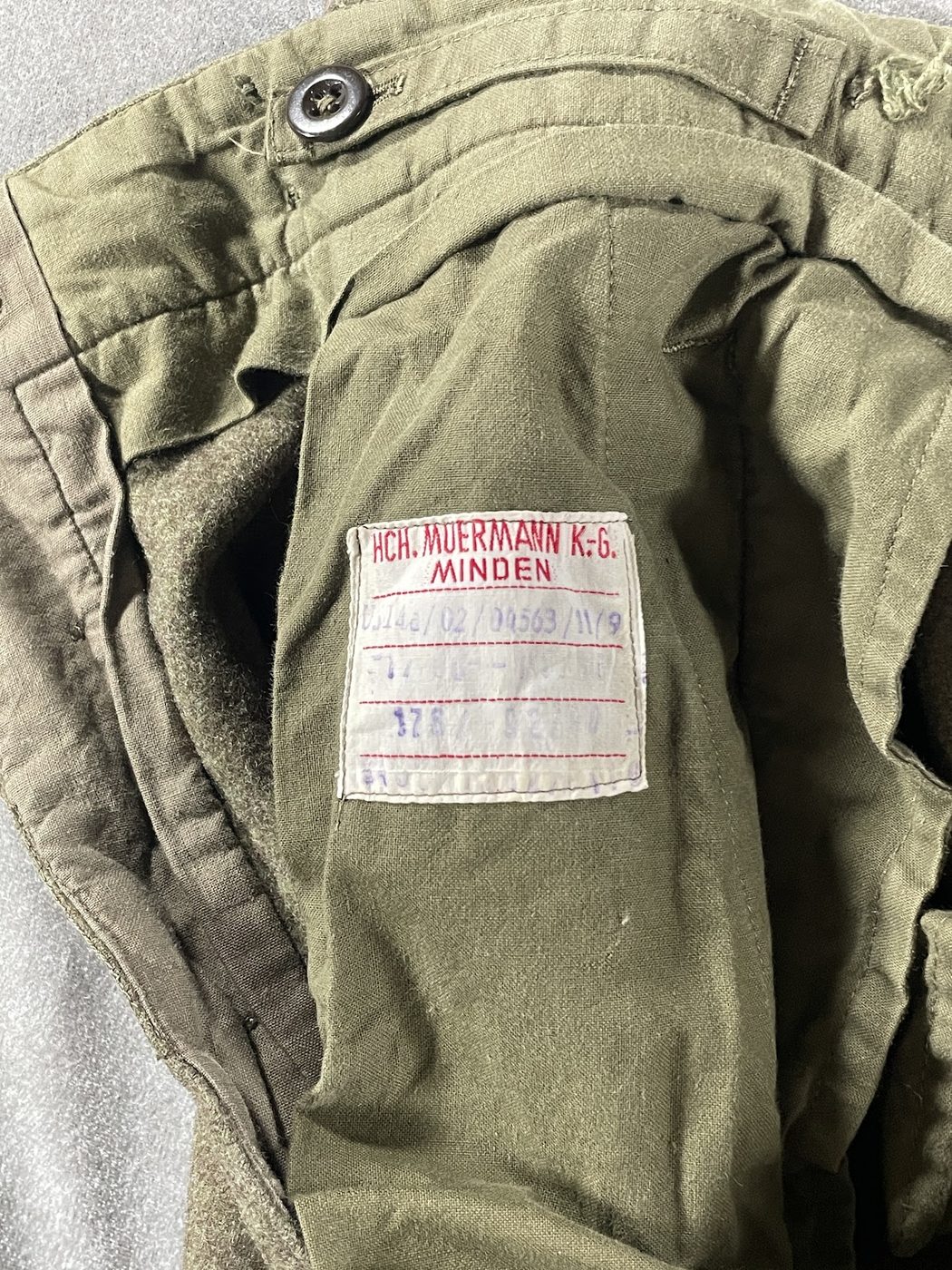
The red print gives a company name and a town. "K.-G." is short for Kommanditgesellschaft, a common German form of partnership, and Minden is a town in north-west Germany. Military clothing like this was made by many contractors, so the label tells you who sewed it, not what it is called.
The ruled lines below were filled in with a purple stamp. On this pair only parts of the first line are clear (a run of numbers and letters separated by slashes). We are not going to guess the rest. If you have a pair with clearer stamps, the size and year are often in those lines, but read only what you can actually see.
2. When it could be from
The Bundeswehr, the armed forces of West Germany, was officially founded on 12 November 1955 (Wikipedia: Bundeswehr). That gives a pair like this an earliest possible date. One collector's overview notes that the first field uniform was an olive-yellow mottled suit, replaced in the early 1960s by a plain olive one (Cold War Decoded). This pair is plain olive, but that overview is about the field suit, not wool trousers, so it does not date this pair on its own.
Our shop places it around the 1950s to 1960s. That is our judgment from the wool, the color and the construction. The faded stamps do not confirm a year.
3. Built for the field: knees, cuffs and pockets
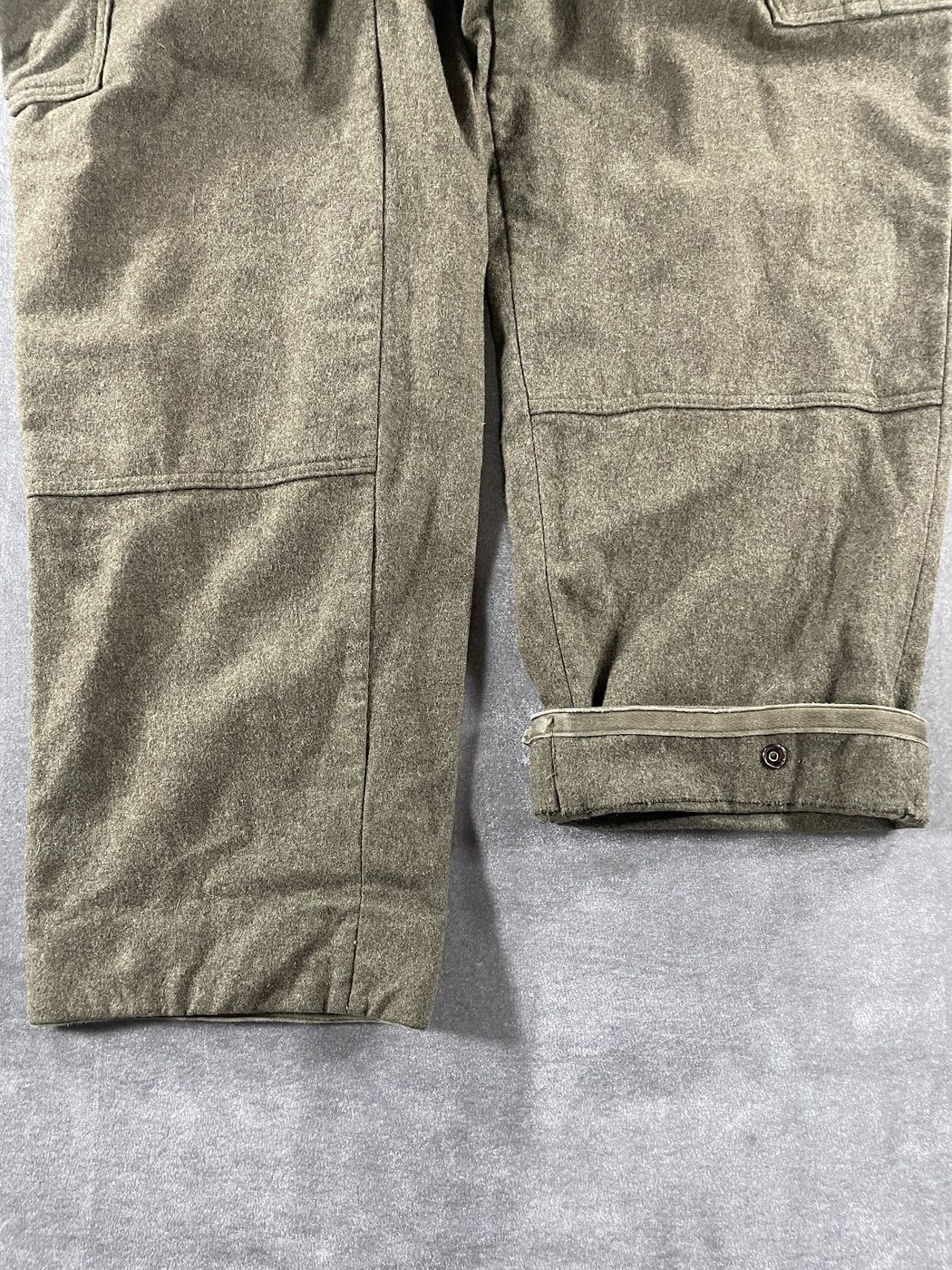
Each knee has a second piece of wool sewn on top. At the hem there is a buttoned tab, so the cuff can be drawn in, for example over boots. Neither is needed for everyday trousers. Both make sense for kneeling and walking outdoors.
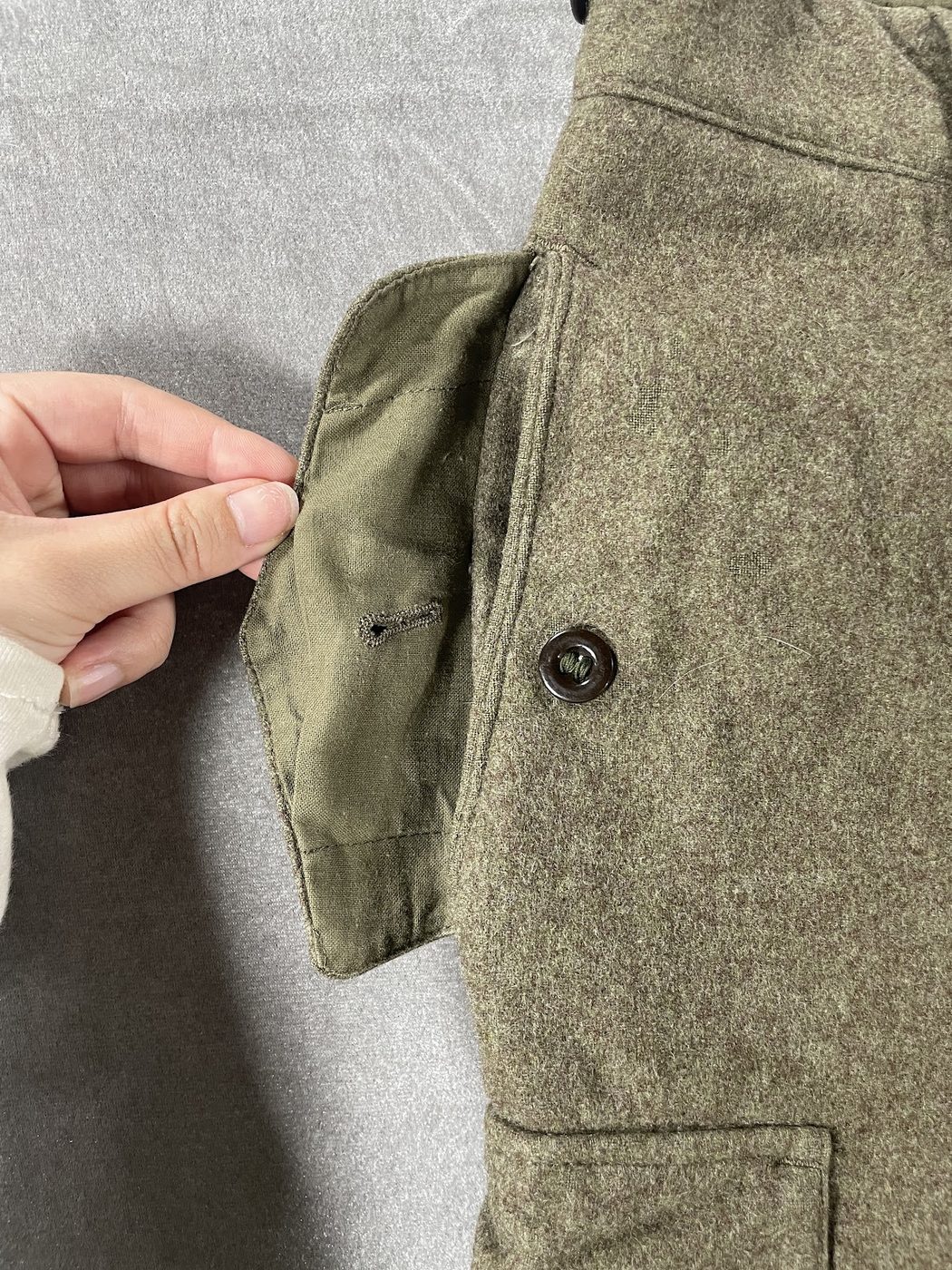
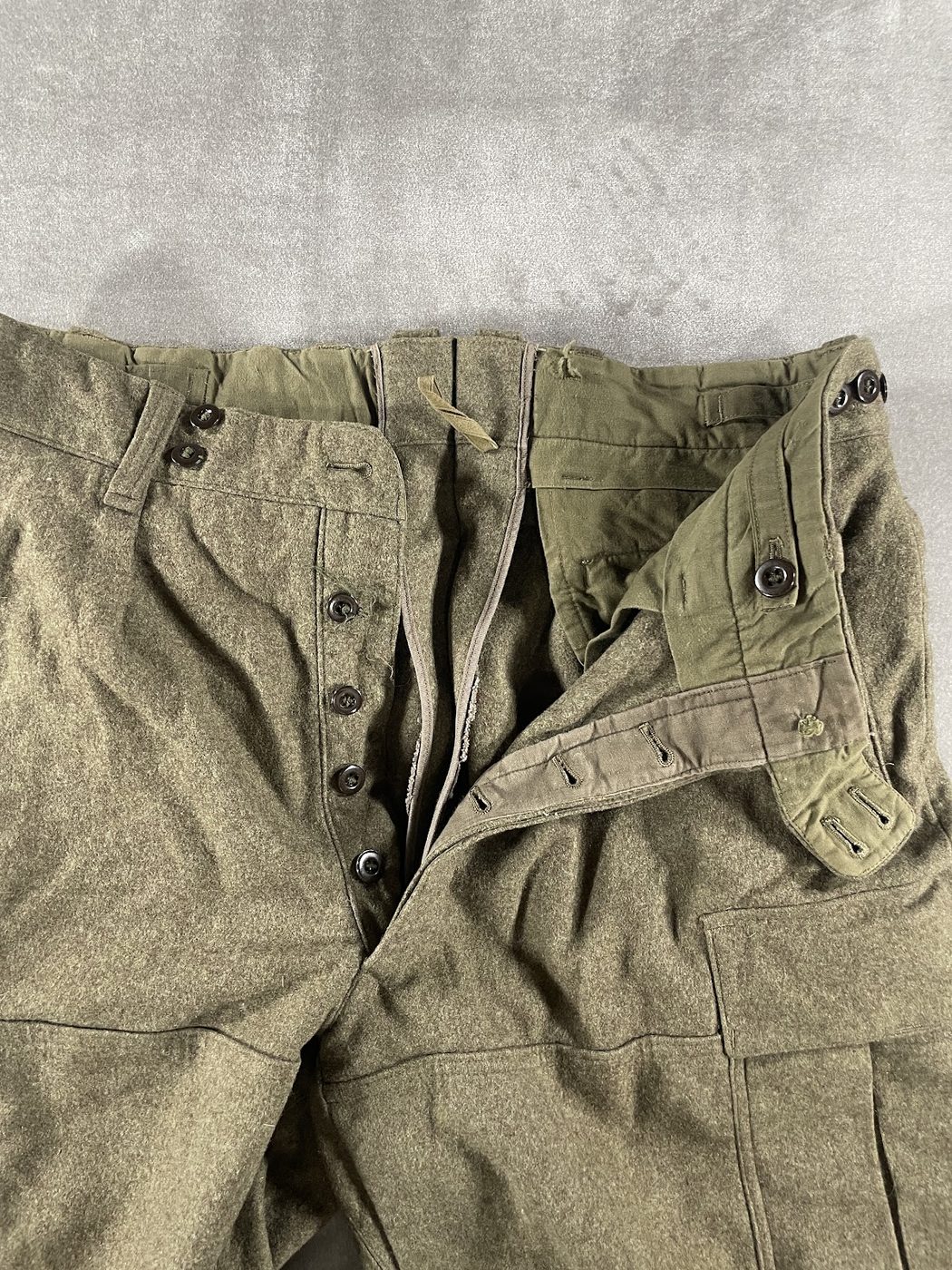
The pockets close with flaps over buttons, including the hip pockets. The front closes with a button fly, and the waistband has buttons on the outside for braces.
What we cannot tell you
We cannot give the exact year or the original issue size, because the stamps are too faded. We also cannot say how many contractors made the same pattern, or whether this maker made other garments. The label proves the maker and the town. The rest is reading the construction.
Condition, honestly
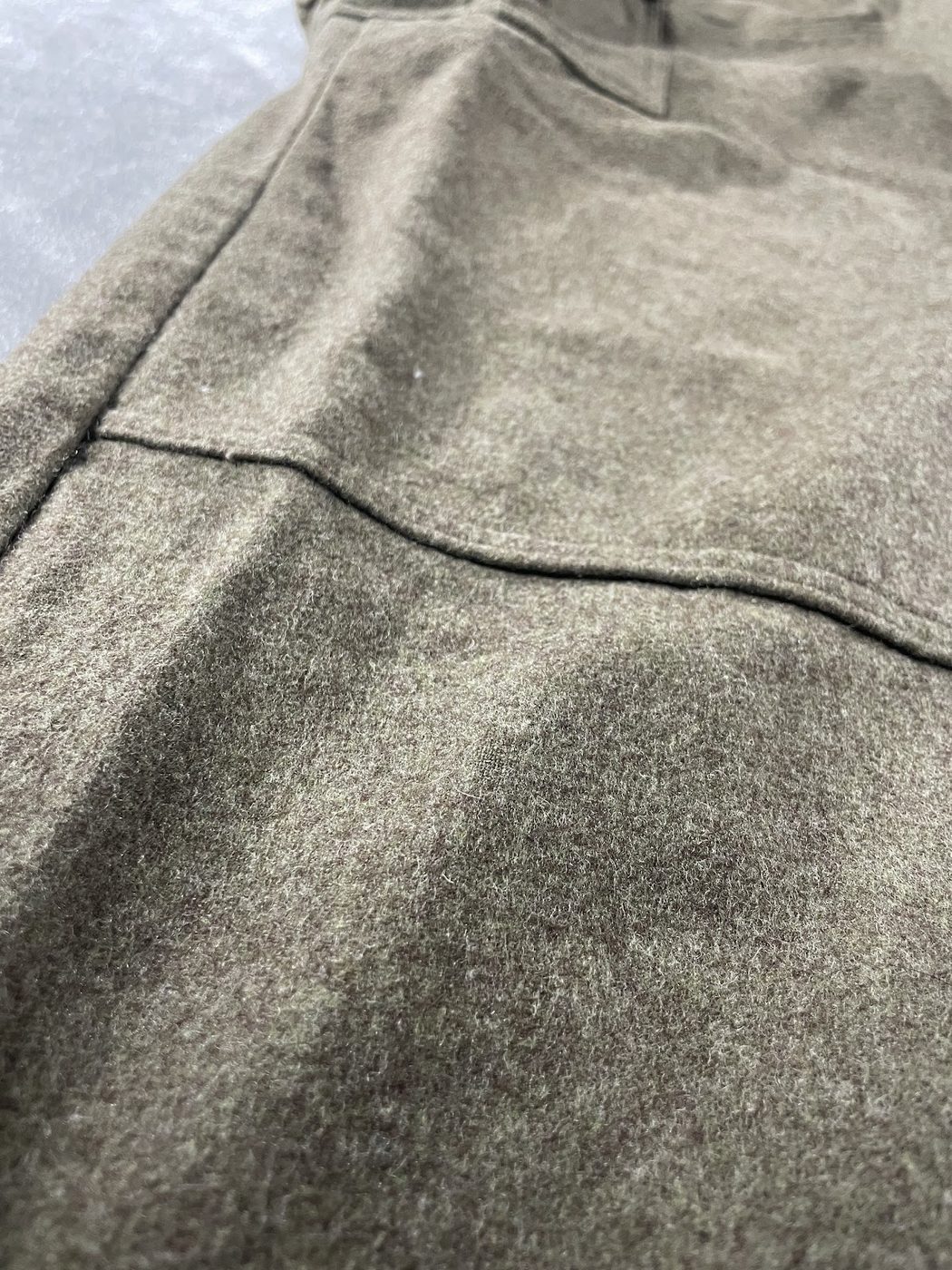
There are loose threads on the waistband, rubbing around the crotch, and some marks. The photos show the rest.
These trousers are in our shop
We run a small vintage shop in Kawagoe, Japan (Old Pawn Notes and the shop are run by the same people). The waist measures 86 cm, about a men's large.
Sources
- Wikipedia: Bundeswehr (founded 12 November 1955)
- Cold War Decoded: Uniforms of the West German Bundeswehr
This guide was drafted with AI assistance from our own notes and photos, then checked by the shop owner. Every photo shows a real piece we handled. Any diagrams are simple drawings and are labelled as diagrams.